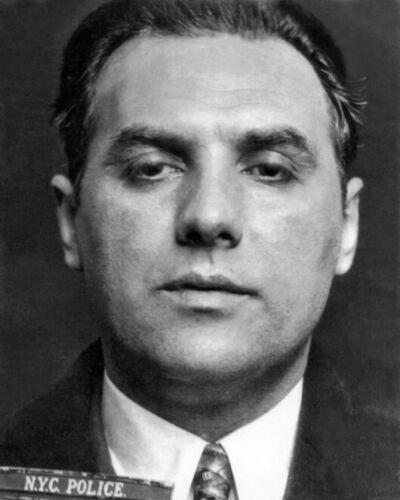
When discussing the most dangerous men in American organized crime, names like Lucky Luciano, Al Capone, and John Gotti often dominate the conversation. Yet few gangsters inspired the fear that surrounded Harry “Pittsburgh Phil” Strauss. Unlike the famous bosses who built criminal empires and controlled powerful crime families, Strauss built his reputation through violence. He became one of the most feared killers employed by Murder, Inc., the notorious enforcement arm of the National Crime Syndicate during the 1930s.
Strauss never controlled a crime family, never sat on the Commission, and never sought public attention. His role was much simpler. When organized crime leaders needed someone eliminated, Harry Strauss was often the man selected to do the job.
Murder, Inc. and the Gambino Connection
One thing that makes Harry Strauss different from many of the mobsters featured on American Mafia History is that he was never known to be a made member of any single Mafia family. Instead, Strauss operated primarily through Murder, Inc., the feared organization responsible for carrying out murders on behalf of organized crime leaders throughout the country.
Because Murder, Inc. was heavily influenced by Albert Anastasia, who would later become boss of what is now known as the Gambino crime family, many historians associate Strauss most closely with the future Gambino organization. However, his work often benefited multiple crime families, making him one of the few underworld figures whose loyalty was tied more to Murder, Inc. than to any single Mafia family.
Early Life
Harry Strauss was born Harry Ostrovsky on July 28, 1909, in what was then part of the Russian Empire. His family immigrated to the United States when he was still a child and settled in Brooklyn, New York.
The nickname “Pittsburgh Phil” followed Strauss throughout his criminal career despite having no known connection to Pittsburgh. Like many young men growing up in Brooklyn’s working-class neighborhoods, Strauss was exposed to crime at an early age. By his teenage years, he had accumulated arrests for assault, theft, and various street offenses.
While some future gangsters gravitated toward gambling, bootlegging, or labor racketeering, Strauss seemed drawn to violence. He quickly developed a reputation as a dangerous street thug who had little hesitation about using force. Those qualities would eventually attract the attention of organized crime figures seeking men willing to take on jobs others avoided.
The Rise of Murder, Inc.
The early 1930s marked a major turning point in organized crime.
Following the Castellammarese War, Lucky Luciano reorganized the American Mafia into the modern Five Families structure. Alongside powerful associates such as Frank Costello, Vito Genovese, and Meyer Lansky, Luciano helped establish the Commission to oversee disputes and maintain order among the nation’s criminal organizations.
At the same time, another group was quietly becoming one of the most feared organizations in America.
That group would become known as Murder, Inc.
Led largely by Louis “Lepke” Buchalter and heavily influenced by Albert Anastasia, Murder, Inc. operated as a nationwide murder-for-hire service. Mob bosses from New York and beyond could use its members to eliminate rivals, troublesome witnesses, and disloyal associates without directly involving members of their own families.
Strauss quickly became one of its most valuable assets.
Building a Reputation
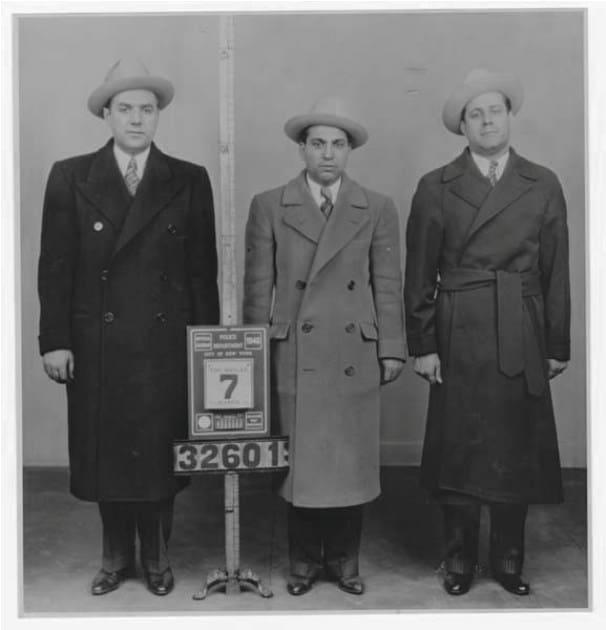
Strauss worked alongside notorious killers such as Abe Reles, Harry Maione, Frank Abbandando, Martin Goldstein, and Charles Workman. Together, they formed one of the most feared groups of assassins in the history of organized crime.
What separated Strauss from many of his fellow killers was his adaptability.
Most assassins relied heavily on firearms. Strauss often preferred not to carry a weapon. He reportedly believed carrying a gun increased the risk of being arrested before a job could be completed. Instead, he frequently used whatever weapon was available.
As stories circulated through the underworld, Strauss developed a reputation for extreme brutality. Victims were reportedly shot, stabbed, strangled, beaten, and bludgeoned. Some stories claimed he enjoyed finding unusual ways to carry out murders, though separating fact from legend became increasingly difficult as his notoriety grew.
Regardless of which stories were true, one fact remained consistent. Strauss was willing to perform jobs that many other gangsters considered too dangerous.
The Peak of His Power
Throughout the 1930s, Murder, Inc. became one of the most effective enforcement organizations in the country.
Its structure provided a valuable service to organized crime leaders. Instead of using members of their own organizations to commit murders, bosses could rely on professional killers who had little direct connection to local disputes. This created an additional layer of protection between the people ordering murders and the people carrying them out.
Strauss thrived in that environment.
As his reputation grew, so did the stories surrounding his body count. Some law enforcement officials estimated he may have participated in more than one hundred murders. Others believed the total was considerably higher.
No one knows the exact number.
What is known is that prosecutors and investigators considered Strauss one of the most active killers associated with organized crime during his era. Few men earned a more fearsome reputation.
While gangsters like Joe Adonis and Frank Costello built influence through political connections and criminal enterprises, Strauss built his reputation through violence alone.
Abe Reles Turns Informant
For years, Murder, Inc. appeared untouchable.
Witnesses were often too frightened to cooperate with authorities. Victims were frequently criminals themselves, making investigations difficult. Police suspected numerous members of the organization, but struggled to gather enough evidence for convictions.
Everything changed in 1940.
Abe “Kid Twist” Reles, one of Murder, Inc.’s most important members, agreed to cooperate with prosecutors.
The decision sent shockwaves through organized crime.
Reles possessed firsthand knowledge of numerous murders and knew many of the individuals responsible. More importantly, he was willing to testify.
His cooperation provided prosecutors with an unprecedented opportunity to dismantle Murder, Inc. from the inside.
As Reles began naming names, investigators started building cases against many of the organization’s most feared killers.
Harry Strauss quickly found himself in serious trouble.
Trial and Conviction
Authorities eventually charged Strauss in connection with the murder of bookmaker Irving “Puggy” Feinstein.
The testimony provided by Reles and other witnesses proved devastating. For perhaps the first time in his criminal career, Strauss faced evidence that could not easily be dismissed.
During the proceedings, Strauss reportedly attempted to convince the court that he was mentally unstable. His unusual behavior attracted considerable attention, but prosecutors argued that it was merely an act designed to avoid punishment.
The jury was not persuaded.
Strauss was convicted of first-degree murder and sentenced to death.
For a man who had spent years escaping serious consequences despite countless allegations, the conviction marked a dramatic downfall.
The End of Pittsburgh Phil
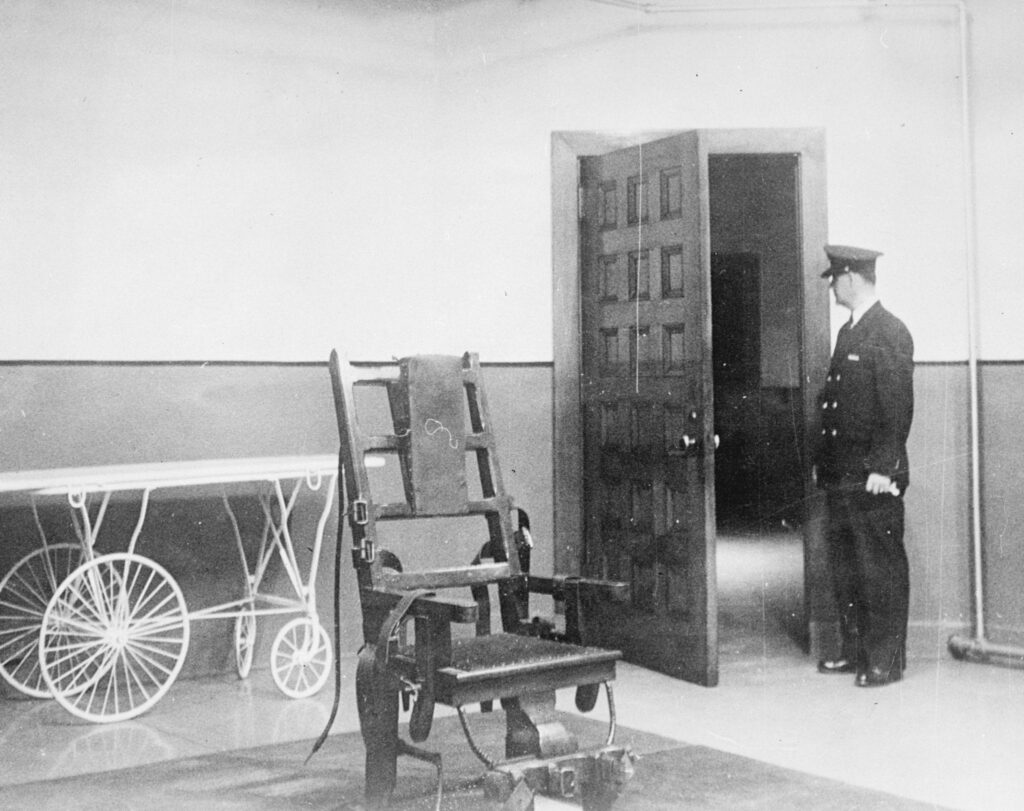
On June 12, 1941, Harry “Pittsburgh Phil” Strauss was executed in Sing Sing Prison’s electric chair.
He was only 31 years old.
Martin Goldstein, another Murder, Inc. member, was executed the same day.
The executions represented a major victory for law enforcement and signaled the beginning of the end for Murder, Inc. As additional members were convicted and imprisoned, the once-powerful organization rapidly collapsed.
The era of contract killers operating with near impunity was coming to an end.
Legacy
Unlike Lucky Luciano, Albert Anastasia, Carlo Gambino, or Vito Genovese, Harry Strauss never became a powerful Mafia boss. He left behind no crime family, no criminal empire, and no organization bearing his name.
What he left behind was a reputation.
To law enforcement, Strauss was one of the most dangerous killers ever associated with organized crime. To fellow gangsters, he was the man called upon when a problem required a permanent solution.
More than eighty years after his death, Harry “Pittsburgh Phil” Strauss remains one of the most feared figures from the Murder, Inc. era. While many mobsters became famous for the power they accumulated, Strauss became infamous for something far darker—the extraordinary violence that helped make Murder, Inc. one of the deadliest organizations in American criminal history.