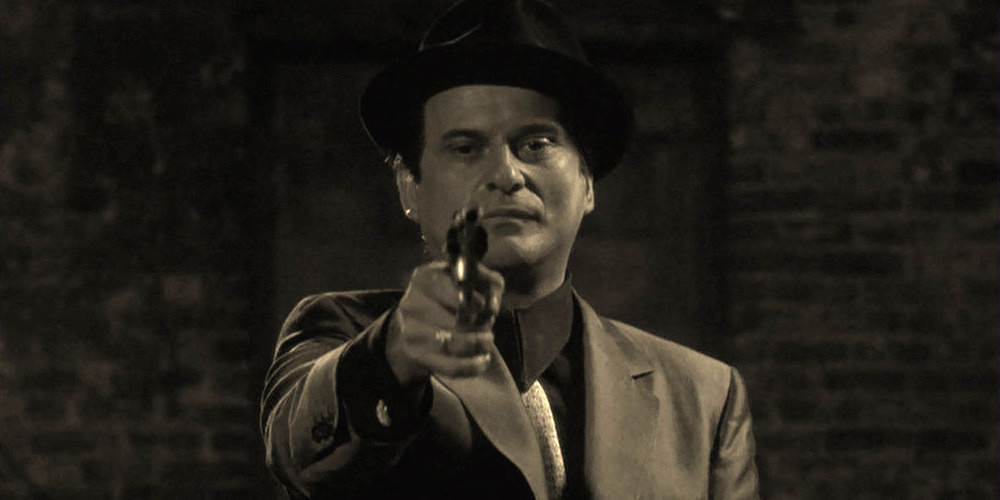
Gaetano “Tommy” Lucchese – Lucchese Crime Family Namesake, Part I

 Gaetano Lucchese was born on December 1, 1899 in Palermo Sicily and immigrated with his parents Giuseppe and Maria in 1911. They settled in East Harlem, an Italian neighborhood of Manhattan where Lucchese’s father worked as a laborer hauling cement. Lucchese worked in a machine shop to help this family earn money until an accident amputated his right thumb and forefinger in 1915.

When Lucchese turned 18 years old he started a window cleaning company which dubbed as an extortion racket for the 107th St. gang to which he was a member. Any business that refused to use his service had their windows broken. His closest friends Charlie Luciano, Frank Costello, and Meyer Lansky were also a part of the gang and specialized in burglarizing stores, stealing wallets, and smalltime gambling. Though they form the gang themselves they operated under the protection of Bronx-East Harlem boss Gaetano “Tom” Reina, a well-established gangster.

In 1920 Lucchese was arrested for auto theft. The arresting police officer compared Lucchese’s deformed hand with that of professional baseball pitcher Mordecai “Three- Finger” Brown. The police officer nicknamed Lucchese “Three-Finger Brown” and cited the name as a Lucchese alias. Despite his disdain for the nickname, it stuck for the rest of his life, however most of his associates called him, “Brown” for short.

In January 1921 Lucchese was convicted of the auto theft and sentenced to three years and nine months in prison. He served 13 months at Sing Sing Correctional Facility before being paroled. It was Lucchese’s first and only conviction of his life. After his release from prison in 1923 he returned to his old friends Charlie Luciano, Frank Costello, and Meyer Lansky, who had become friends with another Jewish gangster named Arnold Rothstein.
In late 1927 Lucchese was arrested under the alias of “Thomas Arra,” and charged with receiving stolen goods. Law enforcement released him pending trial but he never returned. On July 18, 1928 he was arrested along with his brother-in-law Joseph Rosato for the murder of Louise Cerasulo a smalltime hood. The charges were dropped six days later.

The beginning of the 1930s brought about the Castellammarese war between two rival crime bosses in New York, Giuseppe “Joe the boss” Masseria and Salvatore Maranzano. The Reina gang aligned themselves with Masseria, however Reina secretly changed his allegiance to Maranzano because Masseria demanded large tributes of Reina’s rackets. Reina’s second in command, Tommaso “Tommy” Gagliano found out about the change in allegiance and told Masseria about Reina’s betrayal. On February 26, 1930 a Masseria gunman named Vito Genovese shot and killed Reina outside his girlfriend’s apartment. Masseria then made his ally Joseph Pinzolo boss of the Reina gang, ignoring Gagliano’s good deed.

Gagliano, furious about not being promoted boss of the Reina family and formed a splinter group within the gang. Luciano, Stefano Rondelli, Domincik Petrilli, and Joseph Valachi joined Gagliano in their hatred for Pinzolo.

Valachi testimony

Valachi testimony

Seven months after Reina’s murder, Pinzolo was lured to a Manhattan office he shared with Lucchese at 1457 Broadway. (The two men were partners in a “wind break” business known as California Dried Fruit Importers, which skirted the prohibition law. Wind breaks were blocks of crushed grapes that could be reconstituted by setting them in water. Fermentation would then yield wine.) Upon entering his office Pinzolo was shot and killed by Girolamo Santucci or Dominck Petrilli. Masseria then appointed Gagliano as the new gang boss.Law enforcement suspected Lucchese as being involved in the murder and issued a warrant for his arrest. On September 8, 1930 he turned himself into the police but grand jury failed to indict him on the murder charge citing lack of evidence. (Joe Valachi later testified that “Bobby Doyle” Santucci killed Pinzolo.)
By this time Charles Luciano had grown in strength and secretly plan to end the Castellammarese war. He began negotiating with Maranzano to end the war with Masseria and persuaded Gagliano and Lucchese to secretly switch sides to Maranzano.

Before Maranzano and Luciano could eliminate Masseria, they needed to get rid of powerful Masseria-allied, “Manfredi family” (later called the Gambino family) boss Alfred “Al Mineo” Manfredi. On November 5, 1930 Manfredi and his underboss Steve Ferrigno were murdered in the Bronx by Gagliano and Maranzano gunmen.

Maranzano then declared himself as “Capo di tutti capi” or boss of bosses. He placed Luciano as his second-in-command and divided the gangs into five separate families. The former Reina gang became one of the five crime families in New York City, with Gagliano as its boss and Lucchese as the underboss.

In September 1931 Luciano completed his mission in ending the Castellammarese war and sent a hit squad comprised of Jewish hitmen dressed as policemen and Federal Internal Revenue Service agents to Maranzano’s office where he was murdered. After Maranzano’s death, Luciano created the national Mafia Commission hosting leaders of all the crime families in the United States. Their primary objective was to settle family disputes and prevent organized crime wars.

On January 25, 1943 Lucchese was naturalized an American citizen. It took an additional seven years to secure a certificate of good conduct from the New York State parole Board. A few years later he would attend the mob Havana Conference in Cuba as Gagliano’s representative.

Gagliano Tomb Inscription

Gagliano Tomb Inscription

By the early 1950s Lucchese appeared to be a successful vice president of garment factory on E. 9th St., but behind-the-scenes he controlled established Garment workers unions, Longshoremen unions, and Truckers unions. He also influenced several New York City government officials and the local entertainment industry. As part owner of Casino de Paris, Music Hall he could be seen dining with Jimmy Durante, Frank Sinatra, and Dean Martin.

Lucchese had established himself as a powerful businessman, entrepreneur, controller of unions, and friend of the entertainment industry. He was one of the most powerful mafioso in the country and soon would become even more powerful.

 During a July 1958 Senate hearing Lucchese stated that Gagliano died on February 16, 1951 however historians believe Gagliano actually died on February 16, 1953. It’s been speculated that Gagliano retired in 1951 and turned leadership over to Lucchese, but the family kept it secret to prevent law enforcement or media scrutiny. Whether it was 1951 or 1953 Lucchese was now boss of the Gagliano’s and with approval of the commission the family was renamed the Lucchese crime family.

Carime Tramunti – Financier of The French Connection

            Carmine “Mr. Gribbs” Tramunti was born on October 1, 1910 in Manhattan, New York. He lived most of his early years in a tenement building in Harlem. In 1930 at 20 years old, Tramunti accosted a rent collector in his neighborhood robbing him for his collections. He was arrested but later released due to “lack of evidence”, a norm for that time when someone was reluctant to take the witness stand against someone with ties to the mob.

            In July 1931, Tramunti was tried and convicted of assault, a felony. He was sentenced to 6-15 years in prison at the notorious Sing Sing Correctional Facility in Ossining, New York. After a brief release and subsequent incarceration for a parole violation, Tramunti was eventually released in 1938.

            After being released from prison, Tramunti went back to his old ways eventually taking over one of the most lucrative craps games in New York called the “Harlem Game”. He headquartered out of The Stage Delicatessen in Manhattan, married and had two children. This is thought to be the time period that he became imbedded with the Lucchese crime family in Brooklyn.

Gambino crime family namesake, Carlo Gambino

Tramunti was tight with future boss of the Gambino crime family, Carlo Gambino and used his friendship and Gambino’s power to climb the ladder within the Lucchese’s. In 1967 with the death of crime family namesake Thomas Lucchese, Gambino pushed the commission to have Tramunti succeed him due to his business leadership and general intelligence. The commission agreed and put Tramunti on the top of the Lucchese family. Although it’s thought the commission only agreed because they were biding their time until the true successor Anthony Corallo was released from prison, they were secure enough in their decision knowing Gambino was there to keep things together for the Lucchese’s.            November 19, 1970 Tramunti was indicted on 14 counts of stock fraud for allegedly taking over an investment firm in Florida. He went to trial and was convicted, however almost a year later he was indicted again for lying to a grand jury about his contact with Lucchese capo Paul Vario. He was sentenced to three years in prison on August 6, 1972.

            Later that year and while serving time for lying to the grand jury, Tramunti and 42 others were indicted on drug charges after law enforcement cracked a major heroin route coming in from France through Canada. The trial was dubbed “The French Connection” and received national headlines. Ultimately Tramunti was convicted of financing the operation after a barista overheard him speaking with a drug dealer. Tramunti nodded his head in agreement during the conversation and that’s virtually all the prosecution needed to put him away.

            The verdict reached across the globe with several prominent journalists voicing their disapproval

Modern day Sing Sing prison cell

based on the evidence to convict. On May 7, 1973 Tramunti was sentenced to 15 years in federal prison. On hearing of his sentence he said, “I may be a mobster and may have done bad things but I am not a drug dealer”.

With his incarceration, Anthony “Tony Ducks” Corallo who was then out of prison was place in the top spot. On October 15, 1978 Carmine Tramunti died of natural causes while still serving his sentence.

Paul “Big Paulie” Vario – Goodfella’s Paul Cicero

Paul “Big Paulie” Vario was born on July 9, 1914 and lived in Brooklyn New York. He had four brothers, Vito, Salvatore, Thomas, and Leonard. As a youngster, Vario was in trouble with law enforcement often. In 1925 at the age of 12 he was sent away for seven months for truancy. He had several more convictions through his lifetime.

As a young man Vario joined the Lucchese crime family and worked his way up the ranks taking part in violent crimes such as extortion, hijacking, bookmaking, and numbers games to name a few. He and his brothers also owned several legitimate businesses including a flower shop, cab stand (Euclid Avenue Cab Co) and restaurant (Presto Pizzeria). Vario’s brother, Vito “Tuddy” Vario ran the pizzeria and the cab stand where most their business was conducted.

This cab stand sat directly across the street from the late Henry Hill. As a young man Hill would run errands for

Paul Sorvino as Paul Cicero in Goodfella’s

Vario and his crew. In return, Vario paid him well and introduced him to other well known gangsters such as Tommy DeSimone, and an Irish mobster named James “Jimmy the Gent” Burke. All four were portrayed in the 1990’s hit movie Goodfella’s, with actor Paul Sorvino playing Vario.

In the 1950’s Vario had his own crew in the Lucchese family. At the time his crew was thought to be the most lucrative crew in thefamily with the bulk of their money coming from hijacking trucks leaving JFK Airport. According to former Vario associate Henry Hill, the airport was like the crew’s “personal Citibank.” Because of his influence over the cargo haulers’ union, Vario could often threaten with a labor strike in order to turn an investigation away. During the 1980s the FBI would listen in with hidden microphones as fellow Lucchese family members and associates boasted “we own JFK,” an obvious testament to the power and influence Vario wielded. Another testament to his power was believed that any form of gambling that was conducted in the East New York section of Brooklyn had to be approved by Vario and his crew. Vario also personally received a percentage of the earnings, and is said to have earned an estimated $25,000 per day.            As capo Vario maintained a low profile. The FBI was had been cracking down for years on the order of Hoover and Robert Kennedy, and he learned it was best to stay hidden. Because of this he rarely spoke on the phone instead giving orders in person to his underlings to carry out or deliver.

In the early 1970’s Vario was “membership director” of Joe Colombo’s Italian American Civil Rights League. After Colombo started attracting too much attention by the FBI, Vario stepped down as director but the damage was done. The FBI had him on their radar and began tracking him closely. As a result of their surveillance, Vario was indicted but refused to cooperate. After being found guilty of contempt he was sentenced to three years in prison. He served his time with Hill who was serving a ten year sentence for attempted murder. Vario served a little over a year and was freed.

Hill and Vario were reported very close. While Hill was still imprisoned Vario had an affair with Hill’s wife, Karen. During this time they became very close. When Tommy DeSimone tried to rape Karen, Vario called the Gambino family and told them DeSimone was responsible for killing two of their men. The Gambino’s killed DeSimone in January 1979.

In 1978 Vario approved of Burke’s plan to steal millions of dollars from Lufthansa Airport which increased his wealth. According to Hill, he once showed him a vault that supposedly contained over one million dollars in cash.

In 1980 Hill turned government witness after fearing Burke and Vario would murder him for drug dealing without permission and his involvement in the Lufthansa Heist. Burke had already taken care of several others involved in the theft, and Hill feared he was next.        Due to Hills testimonies, Vario was found guilty in 1984 for defrauding the Government by helping Hill get out of prison early. A few years later he was sentenced to six years for extortion largely based on Hill’s testimony. At this time, Vario was in bad health, he died on May 3, 1988 at the age of seventy-three from lung cancer while incarcerated at Fort Worth Federal Prison in Texas.

Goodfella, Tommy DeSimone


 Thomas Anthony DeSimone was born on May 24, 1950. He was an Italian_American mobster that worked as an associate of the Lucchese crime family of New York. He had several nicknames, but a couple stood out and fit Tommy nicely; “Two-Gun Tommy” because he always had two guns, and “Tommy D”.

Tommy had three siblings, a sister named Dolares and two brothers, Robert (imprisoned for life)  and Anthony DeSimone. Both Robert and Anthony were associates for the Gambino crime family. His brother Anthony was murdered in 1979 and Robert died in . His grandfather was Los Angeles mob boss Rosario DeSimone in 1922, and his uncle Frank DeSimone was the Los Angeles crime family mob boss in 1956.  

Tommy became involved with a Lucchese crime family crew headed by capo Paul Vairo in 1965. He was fifteen years old, skinny and naïve. Jimmy Burke was a family friend of the DeSimone’s and knew Tommy as he grew up. When he was ready, Jimmy took him in handing him a few rackets to get his feet wet so-to-speak.

DeSimone quickly became known for having a quick temper and a huge appetite. He would drink almost an entire gallon of whole milk each day. Friend and fellow Lucchese associate Henry Hill described Tommy as a “pure psychopath”. He committed his first murder at the age of 18 when he shot Howard Goldstein in cold blood as he walked down the street. Henry Hill was with him and said, “That was cold-blooded, Tommy!” DeSimone replied, “Well, I’m a mean cat.”

DeSimone would kill several more times in his short life. In 1970 he killed a made man with the Gambino crime family named “Billy Batts” Devino. As portrayed in the movie Goodfella’s Devino made fun of DeSimone for once being a shoe shine boy. Devino was a feared gunmen and had killed several people, but Tommy had earned respect as well and didn’t take verbal punishment from anyone. A couple of weeks later Devino was drinking at Hill’s bar when he instructed Jimmy Burke and Henry Hill to keep Devino occupied until he returned. DeSimone returned just after closing where DeSimone, Burke, and Hill killed Devino. They buried his body upstate.


Goodfella’s Joe Pesci acting out the scene of Spider’s death.

DeSimone’s third murder was also portrayed in the movie Goodfella’s. According to Henry Hill, this reenactment is very accurate to what actually happened when DeSimone shot and killed Michael “Spider” Gianco. Spider and insulted DeSimone a week before and DeSimone retaliated by shooting him in the foot. When Spider returned to his job as a bartender, he and DeSimone exchanged more words. When Burke jokingly gave Spider money for having the guts to stand up for himself, Tommy pulled out his .38 caliber revolver and shot Spider three times in the chest. Hill checked his pulse and announced he was dead. Burke, who was in charge of the crew told Tommy he would have to dig the hole to hide the body himself. Tommy agreed, and Spider was never seen again. Since the making of the movie there has been speculation that Hill made up Michael “Spider” Gianco as law enforcement looked for the body where Hill stated it would be and found nothing. Furthermore there are no records or birth certificate related to Michael Gianco, and in the neighborhood where he purportedly lived and worked, no one had ever heard of him. Unless a body is found, that death will remained unsolved as Hill, who died on June 25, 2012 was the last person alive who could prove a murder took place.

DeSimone killed several other people after Spider; a warehouse foreman named Stanley Diamond who DeSimone was just supposed to rough up, and Gotti protégé Ronald “Foxy” Jerothe on December 18, 1974. To Jerothe’s disapproval, DeSimone had dated Jerothe’s sister. When Jerothe found out about it, word got back to Tommy that Jerothe had said he was going to kill him. Acting on the threat, DeSimone went to Jerothe’s apartment, knocked on his door, and when Jerothe opened the door, DeSimone stuck a .38 caliber pistol in his face and shot Jerothe between the eyes killing him instantly. DeSimone’s fifth murder occurred when Burke ordered the murder of hisbest friend Dominick “Remo” Cersani. Burke had learned Remo was working with the NYPD and planned to set up Burke in a sting. When Burke found out about the set-up he and DeSimone traveled to Remo’s place, asked him to “go for a ride”, and was subsequently killed by DeSimone by choking him with a piano wire. They buried Remo next to Burke’s bar and a bocce ball court next door. It’s been said, everytime DeSimone and Burke would play someone on that bocce ball court they would say “hey Romo how ya doing?”

DeSimone was alleged to have taken part in the December 1978 Lufthansa heist from JFK International Airport where $6,000,000 dollars was taken from a warehouse. After the heist DeSimone was ordered to kill Parnell “Stacks” Edwards for failing to hide the delivery truck. DeSimone was told he would become a “made” man when he completed the hit. He found out where Stacks was hiding and shot him several times in the head and chest.

On January 14, 1979 DeSimone’s wife, Angela reported him missing. She said she last saw Tommy “a few weeks earlier” when he borrowed money from her. It been said he was killed on January 6, 1979 when Martin Krugman, the person responsible for telling Henry Hill about the Lufthansa money went missing. Several scenarios have come to light describing why Tommy was murdered.

Some say it was because he killed “Billy Batts” Devino and Ronald “Foxy” Jerothe, both members of the

Tommy DeSimone shortly before he went missing.

Gambnio’s without proper permission as mandated by the commission. The penalty for the perpetrator is death. Another scenario is DeSimone was killed by Burke as DeSimone had killed or ordered to be killed almost everyone involved in the Lufthansa heist. A final scenario is given by Henry Hill when he said Tommy was killed by the Gambino family for the two killings. The Gambino’s only found out about the killings after DeSimone had tried to rape Hill’s wife, who was having an affair with Paul Vario while Hill was in prison. Vario told the Gambino’s that DeSimone was responsible and sanctioned his hit. Henry claimed that in “the week after Christmas” that he and Jimmy Burke had gone down to Florida to straighten out a drug deal gone bad. Tommy had remained behind in New York because he was going to be made. When Jimmy called to see if the ceremony had occurred (the code phrase was to ask if Tommy had seen his godmother yet), Burke was told that it had been called off due to a heavy snowfall. The next day, Burke listened in and found out that DeSimone had been murdered; he slammed the receiver down and began crying, as depicted in the film Goodfella’s.

Louis Eppolito: Working for the Mob

 In the 1980’s and 90’s two NYPD Police detectives were involved in murder for hire and various other illegal activities on behalf of the Lucchese crime family in New York. After their reign was over, several men were dead, and Louis Eppolito and Stephen Caracappa were convicted and sentenced to life in prison.

Louis Eppolito was born in Brooklyn, New York on July 22, 1948. His mother Tessie, was a registered nurse, and his father was a Gambino crime family bookie named Ralph “Fats the Gangster” Eppolito. Eppolito had other mafia influences growing up as well. James Eppolito and James Eppolito Jr., his paternal uncle and cousin were made members of the Gambino family. Unfortunately, both were eventually rubbed out by Gambino soldier Roy DeMeo and their capo Nino Gaggi.

In 1969 at the age of twenty Eppolito began his career as a NYPD police officer. Upon his application, he was asked if he had any relation to the organized crime figures who shared the same name. He lied, indicating he had no relation and was accepted into the NYPD where he showed promise early in his career. He quickly rose to police detective and received several accommodations for bravery and was inducted into the very prestigious Honor Society.

Although the 1970’s were good for Eppolito, the 1980’s proved to be the beginning of his downfall. In 1984 he was suspended without pay for six months when he was accused of passing sensitive information to members of organized crime. The NYPD gave him the option to step down as an officer and go quietly, or to fight it out in court where they were determined to drag his name through the mud. Louis chose to fight and in 1985 a court ruled he was not guilty on all charges. He was immediately reinstated as detective and a short time later promoted.

As an Italian American Eppolito looked the part of the American gangster. One day he accompanied a friend to a casting call for an upcoming gangster movie and at the urging of the casting director he tried out for a small role. Upon completing his audition he was immediately cast as Fat Andy in the 1990 hit movie Goodfella’s. A short time later in 1992 he authored a book titled Mafia Cop: The Story of an Honest Cop Whose family Was the Mob. From there his career in movies and as a writer began to take off. He played small roles in several movies over the next couple of years and in an effort to get closer to Hollywood settled his family in Las Vegas in 1994. 

Later that year a news story broke in the Daily news that Eppolitoand his former partner Stephen

Eppolito as ‘Fat Andy’ in the 1990 hit movie Goodfella’s, starring Joe Pesci, Robert Deniro, and Ray Liotta.

Caracappa were involved in the murder of Gambino family capo, Eddie Lino who was shot nine times as he sat in his 1990 Mercedes S-Class near Brighton Beach on November 6, 1990. Louis immediately returned to New York and made himself available to law enforcement for questioning, however no charges were ever brought so he returned to Las Vegas.

His downfall began in late 1994 when defacto boss of the Lucchese family Anthony Casso turned informant instead of facing life in prison without parole. Casso revealed he’d been paying Eppolito $4000 per month for years in exchange for law enforcement information about the Lucchese’s and other families. Once he was arrested, he told the FBI about Eppolito’s involvement in several robberies, murders and extortion. Over the next 10 years the FBI and local law enforcement built their case against Eppolito and his partner. On March 9, 2005 Louis Eppolito and his former partner Stephen Caracappa were arrested on RICO charges and dubbed the Mafia Cops by the news media, a twist from Louis’s book in the early 1990’s.

During the trail the prosecution laid out in graphic detail their case against the two former detectives. In one such situation the prosecutors, who relied largely on Casso’s testimony, described how in 1986 the two detectives used their computer database to locate a Gambino associate named Nicholas Guido. Guido had once tried to kill Casso in a failed murder attempt. After locating Guido, assassins killed him December 25, 1986. Unfortunately the man they killed was the wrong Nicholas Guido. This Nicholas was a 26 year old man who was on his way to his uncles house for Christmas. He was excited to show him his new car. He never made it.

 The prosecution continued to lay out their case detailing several more murders at the hands of Eppolito and Caracappa including the murder of Eddie Lino in November 1986. Eppolito admitted to Casso the two detectives often used an unmarked police car to pull over their victims. In Lino’s case, they both shot him on the spot; in others they tortured and mutilated the men before eventually killing them.  For each hit the men received $65,000. The prosecutions case was open and closed, and both men were convicted and sentenced to life in prison in 2009. Eppolito received an additional 100 years to ensure he would not see daylight again. Both were also fined over 4 million dollars.


Hit Counter provided by Skylight