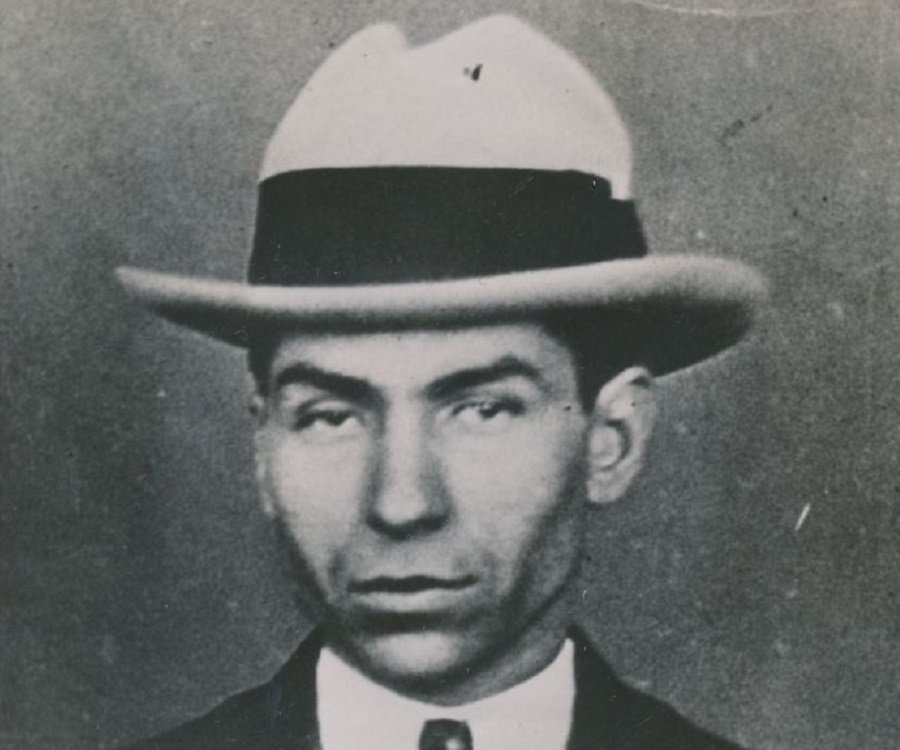
Vincent Louis “Chin” Gigante – Muscle on Both Ends Part I

Vincent Louis “Chin” Gigante, also known as “The Oddfather” for his largely successful efforts to dodge criminal punishment by faking mental illness, was a one-time boxer who rose from low-level enforcer to become don of one of the infamous “five families” of organized crime in New York City.

Unlike most of his predecessors in the mob, Gigante was born in America. He grew up in a family predisposed to gangsterism, with all but one of his four brothers becoming mobsters in the Genovese crime family; the fourth joined the priesthood.

Vincenzo Gigante was the son of jewel engraver Salvatore Esposito Vulgo Gigante and seamstress Yolanda Santasilia-Gigante, immigrants from Naples who never learned English. Vincent was born in 1928 on the Lower East Side of Manhattan, a predominantly immigrant community with a heavy Italian-American presence, especially in the Little Italy neighborhood.

Yolanda’s pronunciation of Vincent’s Italian given name, with a stress on the middle syllable (vin-CHEN-zo) gave rise to his nickname. Three of his brothers followed him into the Mafia, including Mario, who is retired as top capo and acting boss. A fourth, Louis, is a retired priest and former member of the New York City Council.

Vincent Gigante

Gigante as a young boxer

Vincent Gigante got his start not as a gangster but as a pugilist. At 16 he dropped out of a vocational high school for textile workers to work in blue-collar jobs and fight as a professional boxer. About the same time, he started running with members of the Luciano crime family, known today as the Genovese family.

Over a boxing career that spanned just three years, Gigante fought 121 rounds in 25 matches, losing only four. He boxed as a light heavyweight, and he lost his first fight, against Vic Chambers in 1944, and his last, against Jimmy Slade in 1947. He fought several times at Madison Square Garden, winning most.

He spent much of this time associating with Philip “Benny Squint” Lombardo, member of the 116th Street Crew in East Harlem, and other powerful gangsters who belonged to the Luciano family. In 1945, Vito “Don Vito” Genovese, who had once been acting head of the family, returned from exile in Italy, and Gigante soon became associated with him.

It was mostly during the late 1940s and early 1950s that Gigante made his name as an earner and enforcer for the family. He was arrested seven times between ages 17 and 25 for various crimes associated with his mob mentors, including firearms beefs, illegal gambling and receiving stolen goods. Most were dismissed, and he never received a sentence longer than 60 days.

But Gigante’s big break came in 1957, when Genovese decided to make a move against the current don, Frank Costello. Charles “Lucky” Luciano had placed Genovese at the head of the family when Luciano went to prison in 1936, but Genovese was forced to abdicate when he fled to Italy to avoid prosecution on a murder charge. In his absence, Costello had taken over. Now that he was back, Genovese wanted Costello gone so he could resume control. Gigante got the job.

On May 2, 1957, Frank Costello was walking to the elevator in his apartment building at the corner of Central Park West and 72nd Street in Manhattan when Gigante stepped out and fired a .38-caliber handgun. The bullet hit Costello in the head.

But Costello moved just as the gun fired, and he was only grazed. Gigante, mistakenly thinking he had killed his target, fled, jumped into a black Cadillac and drove away. Ever a good Mafioso, Costello refused to identify his assailant. A doorman fingered him, but the defense team was able to attack his credibility and get Gigante off.

Unusually for a failed hit, there were few negative consequences for Gigante, aside from the criminal trial. No one tried to rub him out for the failed job, and instead, he continued to rise through the ranks.

Gigante did, however, serve five years in prison in the early 1960s for heroin trafficking, where he shared a cell with Genovese. This strengthened his position within the family even further. Upon his release (he was paroled early after residents of his Greenwich Village neighborhood pleaded with the judge), he was put in charge of the Greenwich Crew by Genovese, rising to caporegime.

Gigante had his hands in several pies. He dealt in loansharking and enforcement, bookmaking, hijacking, extortion, and labor racketeering in the hauling and construction industries. His crew, one of the most powerful in New York, ran organized crime rackets throughout Lower Manhattan. Under his command, they dominated the scene for more than a decade, starting in the late 1960s.

The reach of the Greenwich Crew wasn’t strictly limited to Downtown. Mario Gigante, Vincent’s older brother, spread the group’s influence to the Bronx, Yonkers and Westchester County. Vincent Gigante employed other members of his family, including sons Andrew and Vincent Esposito.

Gigante’s work for the Greenwich Crew under Genovese also marked the beginning of a legal and psychological game that would last more than three decades. He was indicted in New Jersey in 1969 on charges he tried to bribe members of the Old Tappan Police Department to tip him off to surveillance by other police outfits. He got the charges dropped using psychiatric reports that he was mentally unfit to stand trial. He would spend much of the rest of his life elaborately feigning mental illness in order to avoid criminal convictions.

Frank Costello – Luciano Crime Family Boss Part II

Like Masseria, Maranzano was an old-school mob boss, a “Mustache Pete,” as they were known. Costello, Luciano and the other “Young Turks” had had enough of the old ways, and they decided Maranzano, like Masseria, needed to go.

In late 1931, less than six months into his reign as “boss of all bosses,” Maranzano called a meeting with the Young Turks. But they knew, through spies, that it was a trap: Maranzano planned to kill them because he feared Luciano and his ambition.

So the young men turned the tables: They sent a hit squad to the meeting in their place. On September 10, 1931, four Jewish hit men, disguised as tax agents, gunned Maranzano down in his Midtown Manhattan office, then stabbed him for good measure. Most historians consider his death the end of the Castellammarese War, which took the lives of about 60 mobsters.

Now that Maranzano was out of the way, Luciano moved into the top spot, strengthening the National Crime Commission and taking over as “boss of all bosses.” He was also firmly in control of what became known as the Luciano crime family, descendant of the Morello family and predecessor of the Genovese family.

Luciano ran the day-to-day business, while Costello served as one of the biggest earners. From the start he ran a large and lucrative gambling enterprise, setting up thousands of slots throughout New York and managing a bookie operation credited with revolutionizing gambling systems across the United States.

His slot operations went swimmingly until reformist New York Mayor Fiorello La Guardia made a show of confiscating every machine and dumping it in the East River. Costello reacted by simply moving his game to New Orleans, where he worked under the protection of corrupt Senator Hughie Long.

At the same time he was drawing in millions for the family, Costello was pumping much of it back out, serving as behind-the-scenes greaser with corrupt pols. It was his agility in this field that would eventually earn him his famous nickname.

Indeed, he bragged that he owned Tammany Hall, the famously crooked machine that ran politics in New York City. He may not have controlled La Guardia, but he had much of the rest of the city in his pocket.

In 1936, Luciano was sent to prison for 30 to 50 years on what may have been trumped-up prostitution charges. That eventually left Genovese in charge of the family, with Costello second in command.

Then, one year later, Genovese faced indictment for the murder of a fellow gangster over the proceeds of a gambling scam. To avoid prosecution, he fled to Italy. Luciano, still acting as permanent boss from prison, put Costello in as acting head of the family.

Costello was a successful boss: He worked with different nationalities and boosted the family’s profits substantially. He controlled a massive gambling empire across the country and gave millions to crooked pols and cops to grease the wheels.

After the end of World War II, Luciano was deported to Italy and his sentence commuted. That put Costello firmly in control of the family. But about the same time, Genovese was shipped home to face murder charges after a botched attempt to cooperate with the U.S. Army in Italy.

The prosecution went nowhere. The witnesses against Genovese wound up dead, and the charges were dropped. Genovese wanted back in charge of the family, and Costello faced a threat to his rein. Genovese was one of the most violent and ruthless leaders in the history of the Mafia, unlike Costello, a sophisticated don who preferred intellect to brawn.

Genovese was now a low-level capo in the family, a fact that made him even angrier at Costello. He started a campaign to win over soldiers to his side in a campaign to oust Costello or have him killed. It was a tough job: Costello had plenty of support within the family and among members of the Commission. His underboss, Guarino “Willie Moore” Moretti, was strong, making the task even more difficult.

Estes Kefauver

Estes Kefauver-Lead the investigation into organized crime in the early 1950′s. Dubbed the Kefauver Committee or the Kefauver hearings.

Costello’s undoing as boss came by way of the so-called Kefauver Hearings on organized crime in 1951. The hearings, led by U.S. Senator Estes Kefauver, drew the testimony of more than 600 mobsters, politicians and lawyers, many on national television.

Unlike the gangsters who testified before him, Costello agreed not to plead the Fifth Amendment. He didn’t answer many questions, and his face never appeared on camera, but many Mafiosi were still unhappy with the fact that he testified at all.

The attention brought new law enforcement and media scrutiny on Costello and his family. It earned him the moniker “the Prime Minster of the Underworld.” His rule quickly began to fall apart.

Moretti, whose tertiary syphilis may have led him to make embarrassing disclosures before the Kefauver Committee, was assassinated later in 1951 for saying too much. Over the next few years, Costello did several stints in prison, including one on contempt charges for walking out of the hearings.

Genovese used all this as an excuse to knock Costello from the top rung. On May 2, 1957, Genovese’s driver, Vincent “Chin” Gigante (a future don himself) shot Costello in the head as he walked to the elevator in the lobby of his apartment building in New York. It was part of a power play against a larger faction of the Mafia in the city.

Amazingly, Costello survived. The bullet merely grazed his head. Gigante turned himself in, but Costello, a loyal mobster to

Frank Costello

Frank Costello sporting a gauze wrap around his head after surviving the assassination attempt.

the end, refused to identify him.

Genovese seized control of what quickly became known as the Genovese family, and Costello voluntarily stepped aside. He was allowed to keep his Louisiana gambling enterprises and legitimate businesses. He and Genovese made peace, and others in the organization continued to treat him as a leading figure in the Mafia for the rest of his life.

Frank Costello died on February 18, 1973, after suffering a heart attack at his Manhattan apartment. His remains are buried in St. Michael’s Cemetery in Queens.

Vito Genovese – Head of the Family

Vito “Don Vito” Genovese was an early boss and namesake of the Genovese crime family in New York. From Prohibition to Apalachin, he used his wits and reputation for violence to help maintain the organization’s place of infamy among the city’s “five families.”

Born in Naples in 1897, Genovese got an early start in crime. Both he and his two brothers, Michael and Carmine Genovese, would grow up to become members of the mob. A cousin, Michael James Genovese, would one day lead the Mafia in Pittsburgh.

Vito Genovese grew up in Italy, where he earned the equivalent of a fifth-grade education before dropping out. At the age of 15, he immigrated to the Little Italy neighborhood of New York with his family, including his parents, Felice and Nunziata Genovese. It was there that he began his career, lifting fruit and other goods from street vendors, and serving as a gofer for local Italian gangsters.

From that small role, Genovese rose to money collector for mobsters involved in the numbers racket. As a young man he met Charles “Lucky” Luciano, another key player in the early years of the American Mafia and one of Genovese’s close friends.

Genovese was climbing further up the ladder by the late 1920s, after doing a year-long stretch in prison for firearm possession. He joined a Brooklyn bootlegging gang run by Giuseppe “Joe the Boss” Masseria, where he supplied muscle and other services. Masseria was among the most powerful mobsters in New York and sought to consolidate control over every family in the city.

Never the suave, sophisticated type like his future underboss and replacement, Frank Costello, Genovese was more like notorious Mafioso Alphonse “Al” Capone, known mostly for his violent streak.

In February 1930, Genovese murdered a rival gangster, Gaetano Reina, on Masseria’s orders. Genovese shot Reina in the back of the head with a shotgun outside Reina’s mistress’ house. Masseria quickly used the opportunity to assume control of Reina’s operation. He put a hit out on Maranzano and a bloody gangland feud known as the Castellammarese War erupted.

Not long after Reina’s death and Masseria’s takeover of his outfit, a series of killings began between Masseria and Maranzano, arch-rivals. Allies on both sides of the dispute died in gunfire across New York and as far away as Chicago.

Genovese and Luciano were supposedly on Masseria’s side. But partway through the war, they joined forces, switched sides and secretly plotted with Maranzano to kill Masseria, with the goal of ending the killings – and, as it turned out, taking power themselves.

Masseria was executed on April 15, 1931, at a restaurant in Coney Island, New York. The alleged killers included Genovese and Benjamin “Bugsy” Siegel. Masseria’s murder and other elements of the “Castellammarese

Bugsy Siegal

Bugsy Siegel

War” (named after Maranzano’s base of operations in Castellammarese del Golfo, Sicily) have been the basis of scenes in numerous works of fiction, from The Godfather to Boardwalk Empire.

With Masseria gone, Luciano took control of his rackets, with Genovese placed second in command. At the same time, Maranzano took steps to create a permanent Mafia structure that would prevent future bloodshed – a structure still largely in place today.

The so-called “Commission” established New York’s five families (which later came to be known as the Genovese, Bonanno, Colombo, Lucchese and Gambino families) and individual Mafia organizations in cities elsewhere in the United States. It also placed Maranzano at its head, as the “boss of all bosses.”

The particulars of this arrangement, however, didn’t last long. The heart of the Castellammarese War had been a generational conflict: a battle between old Italian traditionalists and “young Turks” who had new ideas about organized crime. Maranzano still stood for the former. Genovese and Luciano represented the latter.

In September, 1931, shortly after the Commission was established, Maranzano summoned Luciano and Frank “The Prime Minister” Costello to his office. They sensed an ambush and turned the tables on him, sending hit men who gunned him down instead.

Luciano, now head of what would become the Genovese family, rose to become unofficial boss of the Commission as well, taking Vito Genovese to new levels of power with him. It was around this time that Genovese married his second wife (his first died of tuberculosis) after her husband was strangled to death.

In 1934, after cheating a gambler out of $150,000, Genovese murdered a fellow gangster rather than pay him his share of the scam. Two years later, when Luciano was sent away for 30 years on a pandering beef, Genovese took over the family as acting boss.

But in 1937, facing prosecution for the murder, he fled to Italy, handing the reins to Costello. There he set up a new Mafia operation and developed a friendship with fascist dictator Benito Mussolini. He even ordered the hit of an Italian-American newspaper publisher in New York, possibly on Mussolini’s behalf.

As he had during the Castellammarese War, Genovese switched sides when he saw the tides turning. When the Allies invaded Italy in 1943, he offered to help the U.S. Army. They took him up on the offer, though he ended up using his Mafia ring in Italy to steal from the military.

Despite intense pressure throughout the government to let him slide, Genovese was returned to the United States in 1945 to face trial for the 1934 murder. But the witnesses to the crime ended up dead, and he skated.

Anastasia

Albert Anastasia dead on the barbershop floor

Freed in New York in 1946, Genovese was forced to rely on violence to climb back to the top. Willie Moretti, whom he had left second-in-command, was murdered in 1951 for his testimony before Congress, and a botched hit in 1957 convinced Costello to retire. That put Genovese in charge of his own family once again. He then allegedly ordered the hit that killed Albert Anastasia, boss of what is now known as the Gambino crime family, in order to prevent Costello from making a comeback.

Shortly after, he called the infamous Apalachin meeting of well-dressed mobsters at a farm in Upstate New York. When a New York State Police trooper stumbled upon the unusual scene, he called for reinforcements. The gangsters fled in every direction, some running into the woods in three-piece suits and leather shoes. Genovese was stopped and released.

He didn’t stay free for long. Two years later, he was sentenced to 15 years in federal prison for allegedly selling heroin on what may have been trumped-up charges. He continued to run the operation, ordering several murders from behind bars.

Don Vito Genovese died of a heart attack in prison – specifically, at the U.S. Medical Center for Federal Prisoners at Springfield, Missouri – on February 14, 1969. He was 71. His remains are buried in St. John Cemetery in Queens.

Frank Costello – Prime Minister of the Mob Part I

Frank Costello was one of the most notorious Italian Mafia bosses in American history, with a reach that covered a vast national racket and extended deeper into politics than any other. He was dubbed the “Prime Minister of the Underworld” and led an organization nicknamed the “Rolls-Royce of organized crime.”

Born in 1891 in Lauropoli, a village on a mountain in Calabria, Italy, Costello was originally named Francesco Castiglia, a moniker he changed years later to avoid the stigma of Italian organized crime. At the age of four, he, his mother and his older brother, Edward, immigrated to the United States to join their father, owner of an Italian grocery in East Harlem.

Frank Costello joined the criminal underworld at a young age: His brother, Edward, introduced him to local gangsters by the time he was a teenager. By the age of 13, Frankie, as he now called himself, belonged to a gang and began committing petty crimes. But he rose fast, and he was soon running the 104th Street Gang.

He skated on several early crimes. At 14 he robbed the landlady of the tenement building where he lived with his parents, but he gave the police a phony alibi, and they bought it. He notched his first arrest in 1908, on charges of assault and robbery. He was charged with the same crime in 1912, but he got off clean both times.

Then in 1915, he did 10 months of a 12-month prison sentence on a firearms beef. When he got out, he made a decision to stop committing violent crime himself and focus on more lucrative enterprises. It was the last time he would be behind bars for 37 years despite a life full of crime, and he later claimed it was the last time he carried a gun.

Costello began making lasting ties in the world of the Mafia as soon as he was released. But they were often unusual friendships involving gangsters outside the closed ranks of the Italian-American mob.

He married a Jewish girl, Loretta Geigerman, almost unheard of for an Italian Mafioso. He would eventually become friends with such Jewish mobsters as Meyer Lansky, Benjamin “Bugsy” Siegel, Louie “Lepke” Buchalter and Arnold “The Brain” Rothstein.

But one of his earliest and most important relationships developed while he was doing work for the Morello family, an early New York Italian gang founded by Giuseppe “The Clutch Hand” Morello. The Morello gang, a predecessor of today’s Genovese crime family, was known for the scope of it power and the ruthlessness of its violence.

It was through that gang that Costello met Sicilian-American Charles “Lucky” Luciano, a racketeer in the Little Italy neighborhood on Manhattan’s Lower East Side. Luciano, who would one day come to run the Morello family, introduced Costello to Vito “Don Vito” Genovese (also a future boss and the namesake of the modern family), Tommy “Three-Finger Brown” Lucchese (future boss and namesake of the Lucchese family), Siegel and Lansky.


Costas Mandylor

Frank Costello – (second from right) portrayed by actor Costas Mandylor in the 1991 movie Mobsters.

Luciano’s friendship with Costello – not to mention their partnerships with Jewish gangsters – didn’t sit well with the older, more traditional Mafiosi with whom Luciano associated at the time. They viewed Costello as an outsider because he wasn’t Sicilian, even referring to him as the “dirty Calabrian.”

Nonetheless, these young men formed a tight circle, going to work for themselves in burglaries, extortion, armed robbery, gambling, and drug trafficking. But the real money started flowing with the advent of Prohibition and the Volstead Act, which made alcohol illegal – and immensely profitable. They partnered with Rothstein, who provided the initial funding.

Chicago is notorious for its corrupt ties between pols and organized crime, especially during the 1920s. But there was plenty of crooked money flowing in New York City, too. During the height of Prohibition, Costello and his cronies were forking over an estimated $100,000 a week in protection money to politicians, judges, district attorneys and police.

Even the New York City Police commissioner, Grover Whalen, was in the pocket of the Mafia. When the stock market tanked in 1929, Costello was forced to advance Whalen $30,000 to cover his margin calls.

All told, Costello, Luciano, Siegel and Lansky were pulling down $4 million a year in pure alcoholic profit – nothing compared to the $100 million in annual profit generated by the Chicago Outfit under Al Capone, but plenty when the fragmented nature of New York’s Mafia is taken into account.

Around this time, at Luciano’s urging, Frank changed his name from Castiglia to Costello, which is Irish. “When we got up into our ears in New York politics, it didn’t hurt us at all that we had an Italian guy with a name like Costello,” Luciano later said.

Rothstein was murdered in late 1928 over a gambling debt, and Costello and Luciano decided to leave the freelance life. They signed up with Giuseppe “Joe the Boss” Masseria, head of the old Morello family.

Masseria had taken over the organization and expanded it while Morello languished in prison, and he was now engaged in a bitter contest with the crime family run by Salvatore Maranzano (later known as the Bonanno family). This feud would soon erupt into outright war and enhance Costello’s place in the New York underworld.

The so-called Castellammarese War (made famous by The Godfather) erupted when Masseria ordered Genovese to assassinate the leader of a Brooklyn gang that was associated with Maranzano’s outfit. Retaliatory murders on both sides soon spread as far as Chicago.

In part to bring an end to the killing and in part because they knew Masseria disapproved of Costello’s non-Sicilian background, Luciano and Costello turned coat and flipped sides along with Genovese and Lucchese. They conspired with Maranzano to execute Masseria.

The deed was done in an Italian restaurant in Cony Island on April 15, 1931. Masseria was playing cards when (according to legend) Luciano got up to use the bathroom. Four men, including Siegel and Genovese, burst in and gunned Masseria down. No witnesses came forward and one was charged.

With Masseria gone, Luciano took the reins of the Morello family. He named Genovese his underboss and made Costello his consigliere.

Maranzano used the opportunity to create the “Commission,” the organization used to this day to manage disputes and handle business among the five crime families of New York City. He also made himself its head, or “boss of all bosses.” But he didn’t hold that job for long.

Anthony Strollo – A Reputation for Switching Sides

Anthony Strollo, most notably known as Tony Bender, was born June 18, 1899 in New York City. He had two brothers, Emilio and Dominick. His playground as a young man was Manhattan, where he worked as bootlegger and enforcer for Joe Masseria.

Early in his mafia career Strollo earned a reputation for switching sides when it appeared he might be on the losing end. Carl Sifakis writes in The Mafia Encyclopedia, “Within the councils of the underworld it was no secret that Bender’s loyalty was always for sale to the highest bidder. He changed colors and sides like a chameleon.”

During the Castellammarese War when it was clear that Masseria was going to lose the war, Strollo aligned himself with Maranzano. As a capo to Maranzano, Strollo took part in the planning of several murders.

After Maranzano was murdered by the Luciano crime family, Strollo became a capo for Luciano and his underboss Vito Genovese.  Genovese and Strollo became close friends, with Genovese standing up as best man in Strollo’s wedding.

For a number of years the Luciano crime family was the most powerful family in New York. Strollo gained considerable power as well having control over the Greenwich crew and major illegal gambling in Lower Manhattan. It wasn’t until things changed in 1936 with Luciano’s conviction that the good life for Strollo would begin to unravel. Shortly after Luciano was imprisoned for what appeared to be the rest of his life, his close friend and new acting boss, Vito Genovese was indicted for murder.

 Having no choice Genovese fled the United States for Italy leaving Strollo to “hold things together”. But it was not to be. Genovses’s chief rival Frank Costello pushed Strollo aside and appointed himself the acting boss, and Willie Moretti as his underboss. Strollo maintained a position in the family but with virtually no power. He was also stripped of his Greenwich rackets.

Genovese fought extradition from Italy to the United States for nearly 9 years. In 1946 Genovese returned from Italy having beat the indictment and was allowed back into the Costello crime family as a capo and given the Greenwich gambling rackets once controlled by Strollo and most recently the deported Joe Adonis.

For nearly ten years Genovese and Strollo worked the Greenwich rackets waiting for their time to take back the family from Costello. During that time, Strollo was the mastermind behind several murders on behalf of Genovese’s methodical march to taking over the family from Costello.

Costello was released from prison in 1957 and shortly after Genovese made the move to take control of the Costello family. He enlisted Strollo to set up the murder like he has several times before.

On May 2, 1957 Strollo met Costello at Chandler’s restaurant for an early dinner. During dinner he learned of Costello’s plans for later in the day consisting of several meetings later in the night.

When Costello was walking to the elevator in the lobby of his Manhattan apartment building he was shot in the head by Genovese gunman Vincent Gigante. Unfortunately, Gigante tipped Costello off to the assassination attempt by yelling, “This is for you Frank, prior to pulling the trigger. Costello reacted to the scream by turning his head slightly causing the bullet to graze his head. He fell to the ground and Gigante fled thinking he murdered Costello. Though he survived the murder attempt, Costello immediately stepped down as boss of the Costello crime family relinquishing control to Genovese.

In 1959 Strollo continued to set up murders for Genovese. One day he learned that “Genovese had marked his best friend, Little Augie Pisano, for murder- even Genovese was tenderhearted enough originally to try not to involve Bender-Bender cheerfully volunteered to set up the hit. He broke bread with Little Augie in a Manhattan restaurant while gunmen took up positions in Little Augie’s car to shoot him after he left.”

Through the years, Genovese used murder to take what he needed and created several enemies as he did. Eventually a conspiracy grew to finally end Genovese’s ruthless pursuit to the top of the mafia commission and it included his most trusted confidant, Anthony Strollo.

A secret meeting was held with Gambino boss Carlo Gambino, Meyer Lansky, Frank Costello, and Lucky Luciano who hatched a plan to use Genovese’s drug trafficking as a way to end his reign. Strollo aligned himself with the men and helped set Genovese up that would eventually send him to prison for the rest of his life.

Vito Genovese

Vito Genovese

Though Genovese was sent to prison on a 15 term, he continued to control the family. With time on his hands Genovese used it to figure out how he was captured. He suspected he was set up, but was unsure of how or whom was involved.

At some point, Genovese concluded that Strollo was part of the plot to set him up. After all it was Strollo was stressed to Genovese to give himself up because he would likely only get a short sentence. It was this knowledge that helped Genovese come to the conclusion that his old friend was part of the plot. As boss of the family, Genovese had the means to have Strollo killed and put the wheels in motion.

Sifakis wrote, “On the morning of April 8, 1962, Bender left his home. His wife told him, “You better put on your topcoat. It’s chilly.”

Bender demurred. “I’m only going out for a few minutes…””

He walked down the sidewalk from his home and was never seen again.


Hit Counter provided by Skylight