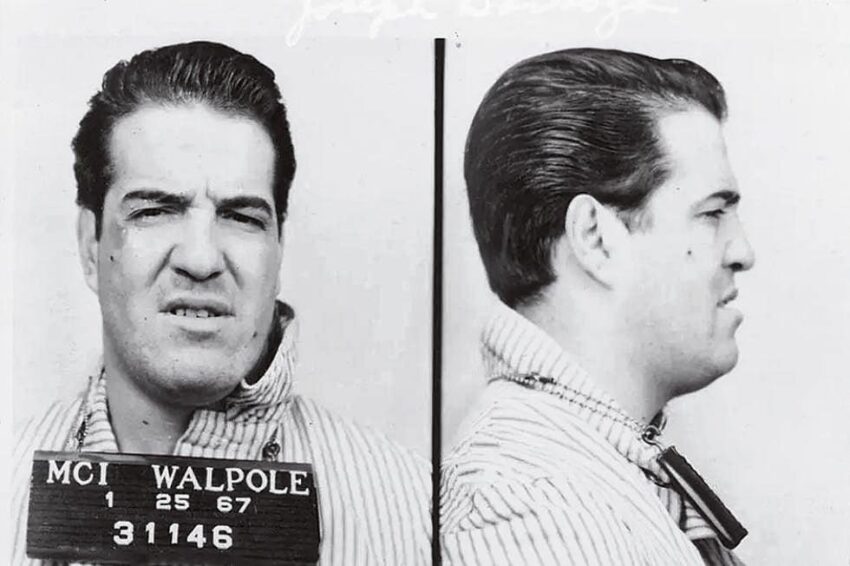
Raymond Patriarca Sr. – The Godfather of New England
When most people think of the American Mafia, they think of New York, Chicago, Las Vegas, or maybe Philadelphia. They think of men like Lucky Luciano, Frank Costello, Vito Genovese, Carlo Gambino, Sam Giancana, or Meyer Lansky.
But for more than three decades, one of the most powerful mob bosses in the country operated from a much smaller stage.
His name was Raymond Loreda Salvatore Patriarca.
From his base in Federal Hill, Providence, Rhode Island, Patriarca controlled organized crime throughout much of New England. His influence reached into Rhode Island, Massachusetts, Connecticut, and beyond. He was feared in Providence, respected in Boston, and known in national Mafia circles as a boss who did not need flash, celebrity, or constant public attention to maintain power. The Mob Museum describes him as a dominant figure in New England rackets for more than 30 years and notes that his standing earned him a seat on the Mafia Commission. (The Mob Museum)
Unlike Chicago’s Al Capone, Tampa’s Santo Trafficante Jr., or New Orleans boss Carlos Marcello, Patriarca did not run his empire from a glamorous casino, tropical gambling resort, or major metropolitan headquarters. He ran it from a vending machine business on Atwells Avenue.
The business was called National Cigarette Service and later became associated with Coin-O-Matic Distributors. To outsiders, it was a legitimate vending machine and pinball operation. To New England mobsters, it was simply known as “The Office.”
Early Life in Worcester and Providence
Raymond Patriarca was born on March 17, 1908, in Worcester, Massachusetts, and was raised in Providence, Rhode Island. By the time he reached adulthood, he had already built a reputation in the criminal underworld. His early record included arrests tied to bootlegging, hijacking, armed robbery, and even murder accusations. (The Mob Museum)
Providence in the early twentieth century was fertile ground for racketeering. Like New York, Chicago, Cleveland, Detroit, and Kansas City, the city had immigrant neighborhoods, political machines, gambling operations, corruptible officials, and plenty of working-class businesses vulnerable to extortion. Federal Hill, Providence’s Little Italy, became the center of Italian-American organized crime in the city.
Patriarca grew up in that world and learned the rules early. He was not the most polished gangster. He was not a public celebrity. He did not cultivate the elegant political image of Frank Costello, who became known as the “Prime Minister of the Underworld.” But Patriarca understood power. He understood fear. Most importantly, he understood how to make other men obey without constantly showing his hand.
In 1938, Patriarca was labeled Providence’s “Public Enemy No. 1.” A larceny conviction sent him to prison for a five-year sentence, though he reportedly served only months before being released. The Mob Museum attributes that early release to political connections, a recurring theme in Patriarca’s story. (The Mob Museum)
The Rise of the New England Boss
Before Patriarca became the boss of New England, the Mafia in the region was divided between Providence and Boston factions. The earlier boss, Filippo “Philip” Buccola, was a powerful figure in the Boston-based Mafia. When Buccola retired and left for Sicily, Patriarca emerged as his successor.
By 1952, Patriarca was effectively running the day-to-day affairs of the New England Mafia. By the mid-1950s, his leadership was firmly established. Instead of keeping the headquarters in Boston, Patriarca shifted the center of power to Providence. That decision changed the balance of organized crime in New England. Boston remained important, but Providence became the nerve center.
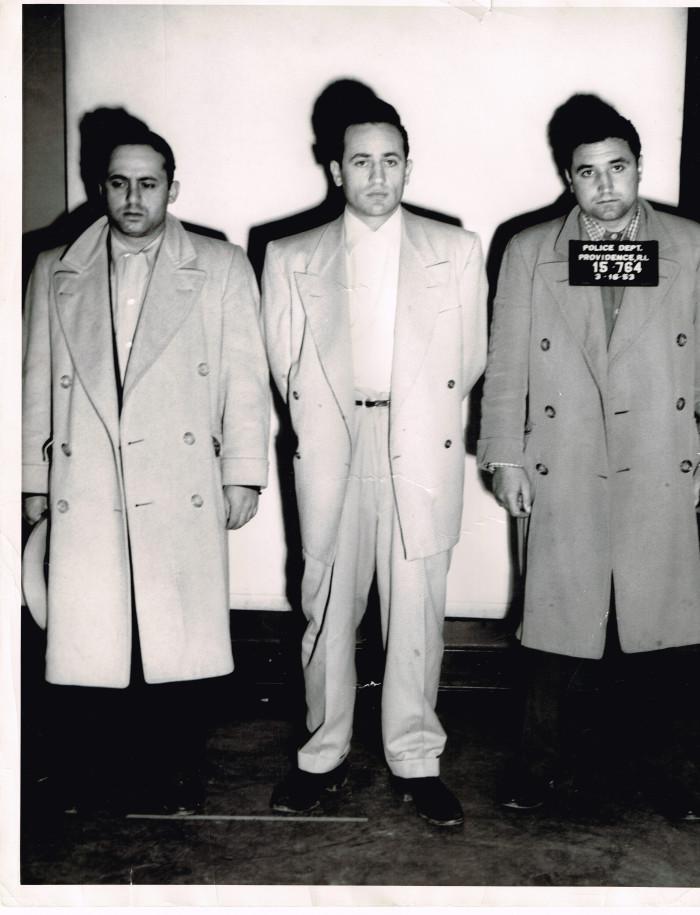
To manage Boston, Patriarca relied on Gennaro “Jerry” Angiulo, who became one of the most important figures in the family’s Massachusetts operations. The arrangement allowed Patriarca to rule from Rhode Island while Angiulo helped manage Boston’s gambling, loansharking, and street rackets. (The Mob Museum)
This is one of the things that made Patriarca different from many other bosses. He did not need to sit in New York to matter. He built a regional empire and then forced the larger Mafia world to recognize it.
His power rested on gambling, loansharking, extortion, vending machines, and control of local rackets. Over time, his interests expanded into legitimate businesses as well. The Mob Museum notes that Patriarca had investments connected to restaurants, bars, racetracks, and even a piece of the Dunes Hotel in Las Vegas. (The Mob Museum)
That Las Vegas connection is important. It places Patriarca in the broader national story alongside men like Meyer Lansky, Sam Giancana, Santo Trafficante Jr., Carlos Marcello, and later Anthony Spilotro — mobsters whose money, influence, or enforcement reached into casino gambling and the underworld economy surrounding it.
“The Office” on Federal Hill
Patriarca’s headquarters became one of the most famous Mafia locations in New England history.
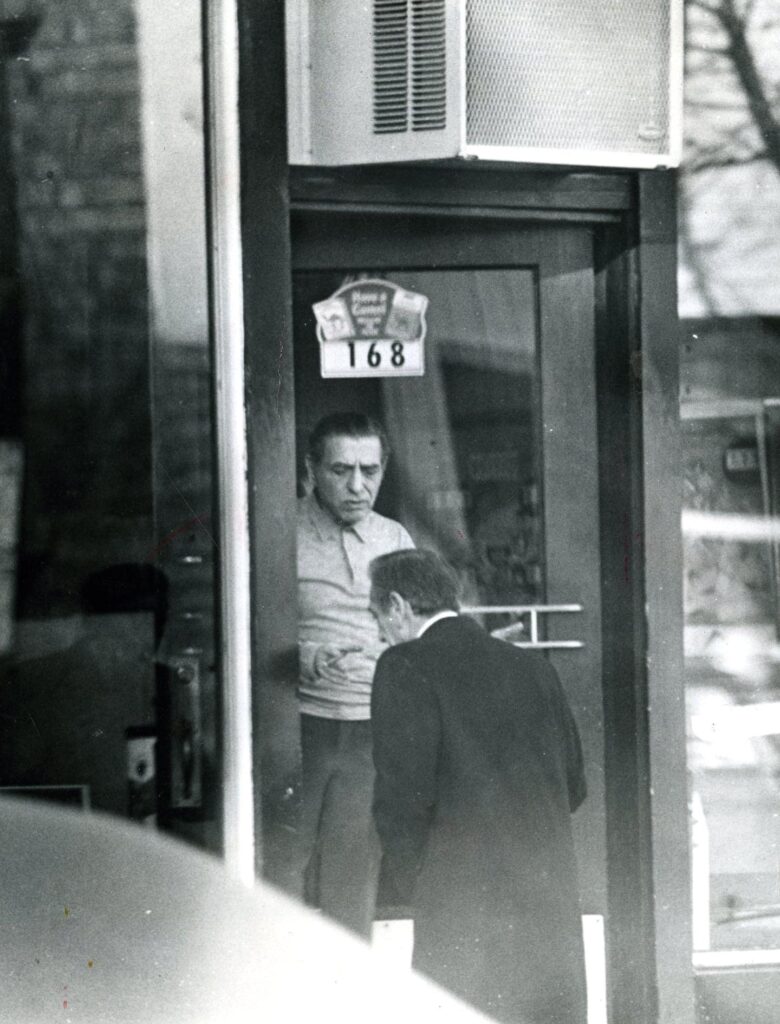
National Cigarette Service and Coin-O-Matic sat near the entrance to Atwells Avenue on Federal Hill. To the public, it looked like an ordinary business. To law enforcement, it became the symbolic headquarters of organized crime in Providence. Rhode Island Monthly describes Patriarca as presiding over the neighborhood from his seat outside Coin-O-Matic, his front for a vending machine business. (Rhode Island Monthly)
Men came and went. Envelopes changed hands. Messages were delivered. Orders were passed. The FBI watched, listened, and eventually bugged the office.
According to the Mob Museum, the FBI planted listening devices in Patriarca’s Providence office in the early 1960s, capturing evidence of his criminal activity. Those bugs became part of the pressure that slowly eroded his underworld power. (The Mob Museum)
But even with federal attention, Patriarca maintained an aura few bosses could match. Local accounts often describe Federal Hill during his reign as a place where the Mafia’s presence was understood even when it was not openly discussed. Businesses paid tribute. Bookmakers operated under rules. Violence was expected to be controlled. In Patriarca’s world, disorder was bad for business.
The National Mafia Connection
Patriarca was not merely a local boss. He was part of the national Mafia structure that had emerged from the Luciano era.
After Lucky Luciano helped organize the Commission in the 1930s, the American Mafia developed a more corporate structure. New York remained the center of gravity, but powerful regional bosses mattered. Chicago had the Outfit. Buffalo had Stefano Magaddino. Tampa had Santo Trafficante Jr. New Orleans had Carlos Marcello. Kansas City had the Civella organization. Providence had Raymond Patriarca.
One FBI memo from 1954 described Patriarca as “the most outstanding gangster in Rhode Island” and linked him to an alleged national syndicate. The same Mob Museum article notes that the Kefauver Committee had already identified Patriarca as a major mob figure years earlier, with Virgil Peterson of the Chicago Crime Commission tying him to members of the Frank Costello mob in New York. (The Mob Museum)
That connection to Costello is important. Costello was one of the most politically connected bosses in American Mafia history. Patriarca, while less glamorous, shared that same understanding that political access and underworld power often worked together.
Patriarca’s name also appears in the broader era of FBI and congressional scrutiny that followed the 1950s and 1960s Mafia investigations. This was the same world that produced the Apalachin fallout, the Valachi hearings, Robert Kennedy’s war on organized crime, and the long federal effort to prove that La Cosa Nostra was not a myth.
Willie Marfeo and the Barboza Problem
The beginning of Patriarca’s serious legal trouble came from within his own violent world.
William “Willie” Marfeo was a Providence gambler and bookmaker who allegedly refused to pay tribute to Patriarca. According to the Mob Museum, Marfeo also assaulted Patriarca’s consigliere, Henry “The Referee” Tameleo. In 1966, Marfeo was shot to death in a phone booth. (The Mob Museum)
The killing became one of the defining cases of Patriarca’s career.
Joseph “The Animal” Barboza, one of the most feared hitmen connected to the New England Mafia, eventually became a government witness. Barboza’s testimony helped send Patriarca and Tameleo to prison. Rhode Island Monthly notes that Barboza’s testimony in the Willie Marfeo murder trial earned Patriarca a prison sentence and that Barboza became part of the early history of the federal witness protection program. (Rhode Island Monthly)
Barboza was no innocent witness. He was a killer who understood the world he was leaving behind. His cooperation marked a dangerous shift in Mafia history. Omertà was still powerful, but it was no longer absolute.
More blood followed. In 1968, Rudolph Marfeo, Willie’s brother, and Anthony Melei were murdered in a Providence grocery store. Patriarca was later tied to the conspiracy surrounding those killings as well. The Mob Museum notes that Patriarca was found guilty in 1970 in connection with the conspiracy to hit Rudolph Marfeo and Melei. (The Mob Museum)
For a boss who had once seemed untouchable, the walls were moving inward.
Prison, Power, and the Myth of Control
Patriarca served time in federal prison, but his influence did not immediately wane. Like Vito Genovese, who attempted to maintain power from prison, Patriarca remained a figure whose word mattered even when he was physically removed from Providence.
The question, as always with Mafia bosses, was whether fear could travel through walls.
For a time, it could. Patriarca still had loyal men. Jerry Angiulo still controlled much of Boston. His name still carried weight. But the longer he remained under law enforcement pressure, the more difficult it became to maintain the old discipline.
The 1970s brought new problems. The federal government had better tools, better witnesses, and greater public support for organized crime prosecutions. Informants damaged the old structure. Electronic surveillance captured conversations that previous generations of mobsters would have considered safe. And younger criminals were not always as obedient to the old rules.
Then came one of the strangest and most damaging episodes in Rhode Island mob history: the Bonded Vault heist.
The Bonded Vault Heist
In August 1975, thieves robbed the Bonded Vault Company in Providence, a commercial safe-deposit business used by mobsters, bookmakers, and other underworld figures who wanted to keep money and valuables out of banks and out of the reach of tax authorities.
The heist became one of the largest thefts in Rhode Island history.
According to GoLocalProv’s reporting on FBI documents, an informant claimed Patriarca approved the robbery and that much of the money stored in the vault belonged to mobsters using false names. If true, the robbery meant Patriarca had effectively allowed his own organization’s hidden bank to be looted. (Go Local Prov)
That allegation is important because it shows the difference between fear and trust.
A Mafia boss can rule through fear for a long time. But an organization still depends on a basic belief that the boss protects the system. If soldiers, bookmakers, and associates believe their own boss might steal from them, the foundation begins to crack.
The Bonded Vault case helped create suspicion inside the New England underworld. Whether Patriarca intended to discipline disloyal earners, recover money he believed was owed to him, or simply profit from a massive score, the result was corrosive. The heist suggested that the old order was no longer as stable as it appeared.
Decline and Death
By the early 1980s, Patriarca was in poor health and aging. Law enforcement continued to pursue him. He faced new accusations, including charges tied to older murders and racketeering cases, but his condition repeatedly complicated prosecution.
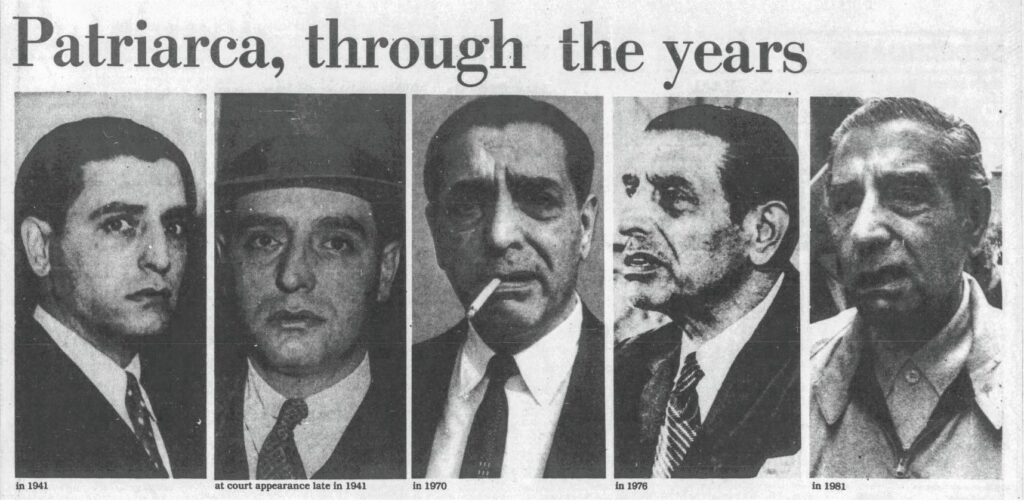
The Mob Museum notes that in 1980, police arrested him as an accessory in a 1968 murder case, and that he also faced federal racketeering charges in 1981, though judges ruled he was too ill to stand trial. (The Mob Museum)
Raymond Patriarca died of cardiac arrest on July 11, 1984. His death ended one era and opened the door to another.
That next era was far more chaotic.
Before his death, Patriarca had chosen his son, Raymond Patriarca Jr., as his successor. It proved to be a disastrous decision. The younger Patriarca did not command the same respect. Jerry Angiulo was imprisoned. William “Billy the Wild Man” Grasso became underboss. Rival factions began testing one another. By the end of the 1980s, the New England Mafia was caught in a violent struggle that weakened it permanently. (The Mob Museum)
This decline also created an opening for other underworld figures in Boston, including Whitey Bulger and the Winter Hill Gang. Bulger’s relationship with corrupt FBI agent John Connolly and his ability to provide information against the Italian Mafia gave him a major advantage in Boston’s criminal world. Your Winter Hill Gang post is a natural internal link here because Bulger’s rise is inseparable from the weakening of the Patriarca organization. (American Mafia History)
Legacy
Raymond Patriarca Sr. was not the most famous mob boss in America, but he was one of the most important regional bosses of the twentieth century.
He turned Providence into the headquarters of New England organized crime. He controlled rackets across state lines. He maintained relationships with national Mafia figures. He survived investigations, informants, rival criminals, and prison. For decades, his name alone was enough to make men pay, obey, or disappear.
He lacked the celebrity of Al Capone, the political elegance of Frank Costello, the national mythology of Lucky Luciano, and the Las Vegas notoriety of mobsters tied to the Chicago Outfit. But in New England, Patriarca was the boss.
His story also shows why the American Mafia was never just a New York or Chicago phenomenon. It was a national network of regional powers, each with its own neighborhoods, rackets, political contacts, killers, and codes of silence.
In Providence, that power ran through Federal Hill.
And for more than thirty years, Federal Hill belonged to Raymond Patriarca.