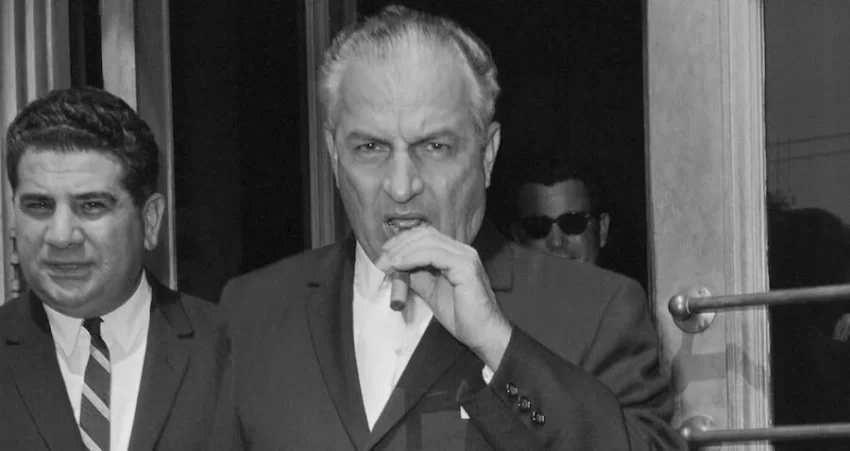
When most people think of the American Mafia, New York comes to mind: five families, the Commission, and John Gotti. But organized crime in America began elsewhere — in New Orleans, where Sicilian immigrants established the Mafia decades before Lucky Luciano reorganized the underworld.
The New Orleans crime family is considered the oldest American Mafia organization, with roots going back to the 1860s. Warring Sicilian gangs on the Mississippi docks grew into an independent criminal empire, reaching its peak under one of the nation’s most powerful mob bosses.
Origins — The Docks of New Orleans
New Orleans became the entry point for Sicilian immigration to America. Between 1884 and 1924, about 290,000 Italian immigrants — mostly Sicilian — arrived in the Crescent City, bringing the traditions, loyalties, and criminal networks of their homeland. No U.S. city received more Sicilians or became more entwined with the Mafia as a result.
By the 1860s, two rival Sicilian factions had formed in New Orleans, fighting for control of the lucrative docks. The Matranga brothers, Charles and Antonio, ran one faction, while the Provenzano family led the other. Both extorted Italian dockworkers and imported muscle from Sicily to bolster their ranks.
The tension between the two factions eventually boiled over into open warfare, drawing the attention of New Orleans Police Chief David Hennessy, who had made it his mission to bring the Sicilian gangs to heel. On the night of October 15, 1890, Hennessy was shot by multiple gunmen on his way home from work. He died the following day.
The assassination of a police chief shocked the city. Two hundred fifty Italians were rounded up for questioning; nineteen were charged with murder. When all were acquitted, a furious mob stormed the parish prison on March 14, 1891, and lynched eleven of the accused — the largest mass lynching in American history. Among them was mob figure Joseph Macheca.
The lynchings sent shockwaves through Italian communities nationwide and nearly ruptured U.S.–Italy relations. Yet they failed to destroy the New Orleans underworld. Charles Matranga escaped the mob and quietly resumed control of the city’s criminal organization, leading it into the new century.
The Matranga Era
Charles Matranga — known as “Millionaire Charlie” — ran the New Orleans family from the aftermath of the 1891 lynchings through the early years of Prohibition. His long reign was characterized by a fierce insularity that would become the defining trait of the New Orleans family for generations. Outside, mobsters were not welcome in Louisiana without permission. The family maintained close relationships with local politicians and law enforcement, operating largely in the shadows while controlling the city’s docks, gambling, and vice trades.
With Matranga’s retirement in the early 1920s, a new chapter began for the New Orleans crime family as leadership passed to a rising Sicilian-born gangster poised to bring the organization into the modern era.
Sylvestro “Silver Dollar Sam” Carollo
Sylvestro Carollo was born in Sicily in 1896 and immigrated to the United States in 1904. By 1918, he had become a high-ranking member of Matranga’s organization, and when the old boss stepped aside, Carollo stepped in. He transformed what had essentially been a Black Hand gang into a modern organized crime operation, installing slot machines in businesses across Louisiana and generating a steady stream of revenue for the family.
Carollo’s dealings with law enforcement were less smooth. He was jailed for narcotics in 1931, attempted murder in 1933, and again for narcotics in 1936 — yet he served less time than sentenced, proof of deep political ties.
His luck ran out in 1947, when he was deported to Sicily. He briefly partnered with exiled Lucky Luciano to set up criminal enterprises in Mexico. In 1949, he tried to return to the United States but was deported again. At that point, control of the New Orleans family passed to the man who would define it forever.
The Carlos Marcello Era
With Carollo gone, Sicilian-born Carlos Marcello took over the New Orleans family in 1947 and held power for more than four decades. Born Calogero Minacore in Tunisia in 1910, Marcello rose through petty crime and drug trafficking, aligning with Frank Costello of the Genovese family to secure his position.
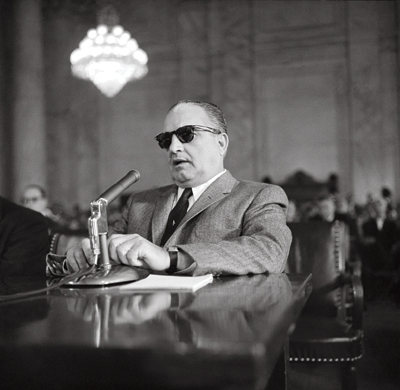
Under Marcello, the family reached its peak. He partnered with Meyer Lansky to skim casino profits, secured a cut of Las Vegas skimming through Florida connections, and expanded across Louisiana, Texas, and the Gulf Coast. Marcello maintained fierce independence and cultivated deep political ties.
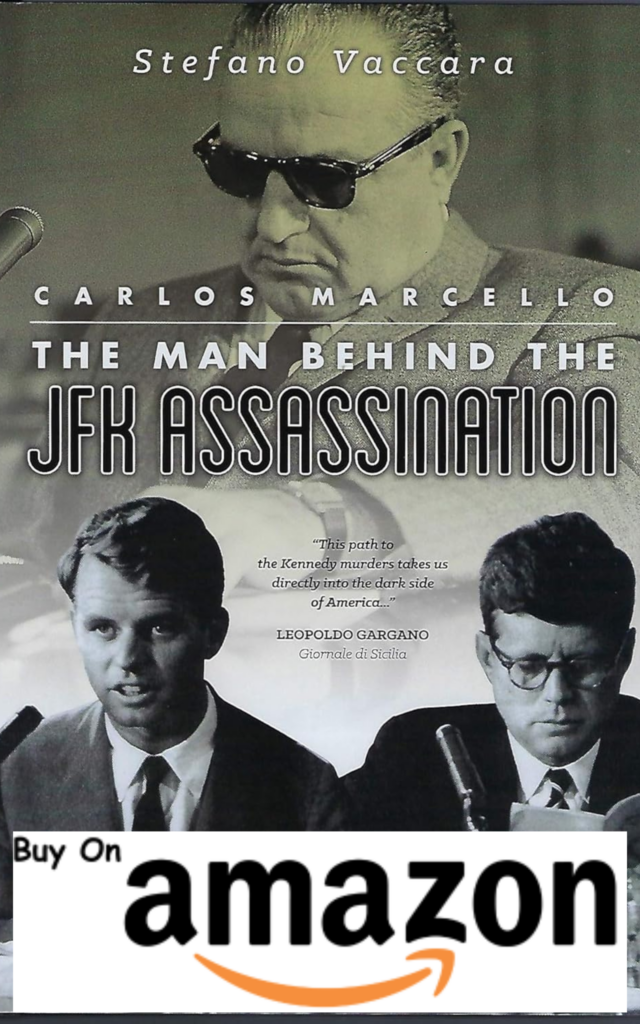
Marcello also became one of the most controversial figures in American history, his name appearing repeatedly in connection with the 1963 assassination of President John F. Kennedy. The House Select Committee on Assassinations concluded in 1979 that Marcello had the means, motive, and opportunity to participate in a conspiracy, alongside Santo Trafficante Jr. and Sam Giancana. The question has never been definitively resolved.
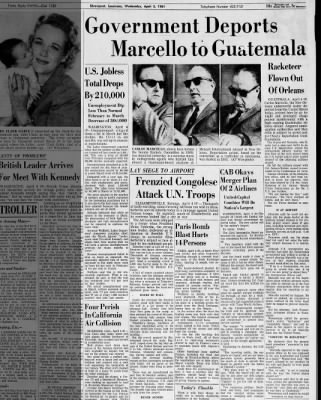
The federal government spent decades trying to bring Marcello down. Attorney General Robert Kennedy personally ordered his deportation in 1961, having him physically placed on a plane to Guatemala. Marcello found his way back to Louisiana within weeks. He was finally convicted in 1981 on charges of bribery, labor racketeering, and corruption, serving time in federal prison before suffering a series of strokes that ended his career. He died at his home in Metairie, Louisiana, on March 2, 1993.
Decline and Fall
After Marcello’s death, the family never recovered. Anthony Carollo, son of Silver Dollar Sam, briefly led before being convicted, along with underboss Francis “Muffaletta Frank” Gagliano, for skimming from Louisiana’s video poker industry in 1995 and 1996. These convictions effectively ended the New Orleans family as a criminal organization.
The New Orleans crime family now exists in name only—a shadow of an organization that once stood as the most influential and deeply rooted Mafia in America.
A Legacy Unlike Any Other
The New Orleans crime family’s legacy is unique in American criminal history. It predates every other Mafia in the country by decades, produced some of the most politically connected mob figures, and for over a century operated in the shadows of one of America’s most complex cities — never flashy, never seeking the spotlight, always powerful.