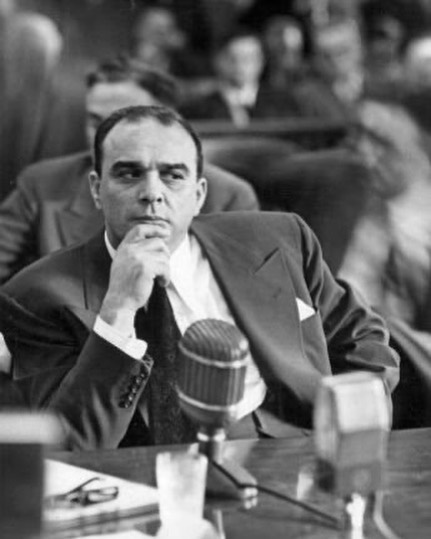
James T. Licavoli stands as one of the most significant figures in Cleveland organized crime history, presiding over the family during its most turbulent and violent era. Known by the aliases “Jack White” and “Blackie,” Licavoli rose from St. Louis bootlegger to become boss of the Cleveland crime family in 1976. His reign was marked by a brutal gang war with Irish mobster Danny Greene that turned Cleveland into “Bomb City, USA” and ultimately brought the family to its knees. In 1982, Licavoli became one of the earliest organized crime figures convicted under the newly enacted RICO Act, cementing his place in mob history for both his power and his downfall.
St. Louis Roots and Early Criminal Career
Vincentio Licavoli was born on August 18, 1904, in St. Louis, Missouri, the third of four children born to Sicilian immigrants Dominic and Girolama Licavoli. The Licavoli family would become a veritable dynasty of organized crime, with multiple members—including cousins Peter and Thomas “Yonnie” Licavoli—rising to prominence in various cities across the Midwest.
In St. Louis, young James joined his cousins in the Russo Gang, engaging in bootlegging during Prohibition. On October 6, 1926, the 22-year-old Licavoli was shot in the leg and arrested after a wild chase and shootout with St. Louis police. Despite having fired on the officers, he was charged only with carrying a concealed weapon, and even that charge was eventually dropped—an early demonstration of the legal maneuvering that would characterize much of his career.
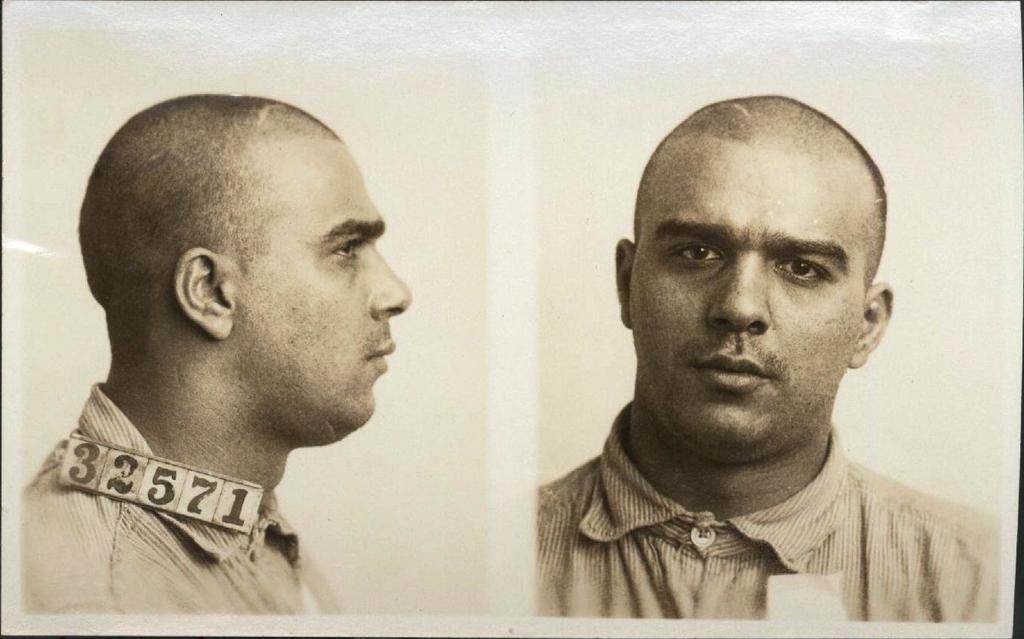
The Licavoli crew later moved their operations to Detroit, where they wrested control of the city’s rackets from the notorious Purple Gang. During this period, Licavoli served time at Leavenworth for bootlegging charges. After his release, he relocated to Toledo, Ohio, reportedly to avoid heat from the murder of an anti-Mafia radio broadcaster.
Establishing Power in Cleveland
In 1938, James Licavoli arrived in Cleveland, where he would spend the rest of his life. There he formed close friendships with fellow mobsters Jimmy “The Weasel” Fratianno and Anthony “Tony Dope” Delsanter. The trio embarked on various criminal enterprises, including robbing gambling halls across northeast Ohio.
In 1940, Licavoli was formally inducted into the Cleveland crime family. He quickly established control over illegal gambling and the vending machine industry in the neighboring cities of Youngstown and Warren, Ohio. During this period, police suspected him in the murders of Jim “Mancene” Mancini and gambling czar Nate Weisenberg, though no charges ever materialized.
By 1970, Licavoli had become known as “the king of the hill”—referring to Murray Hill, Cleveland’s Little Italy neighborhood where the mob maintained its stronghold. He lived modestly for a man of his reputation, sharing a house with a roommate and, despite reports of considerable wealth, exhibiting a miserly streak. He was caught using stolen credit cards on vacation, inserting slugs into vending machines, and even attempting to shoplift a pair of pants from a department store.
The Kefauver Committee
In 1951, when Senator Estes Kefauver’s traveling committee on organized crime arrived in Cleveland for public hearings, Licavoli was among those subpoenaed to testify. He refused to answer questions about his illicit slot machine operations and unreported income to the IRS. For his defiance, he was indicted for contempt of Congress, though the charge was ultimately dropped in court.
Ascending to Boss
In May 1976, longtime Cleveland boss John Scalish died during heart surgery without officially naming a successor. Though Scalish had led the family for over three decades, he had allowed membership to decline and failed to clearly designate who would follow him. Within six days of Scalish’s death, James Licavoli was selected as boss with the backing of key family members including Anthony “Tony Dope” Delsanter, Pasquale “Butchie” Cisternino, Ronald “Ronnie the Crab” Carabbia, and Eugene “The Animal” Ciasullo.
Licavoli was initially reluctant to take the position, but the family needed strong leadership to prevent infighting. He selected his relative Leo “Lips” Moceri as underboss. What Licavoli couldn’t have anticipated was the firestorm about to engulf Cleveland’s underworld.
The Greene War
Danny Greene was an Irish-American union boss turned gangster who had allied with mob-affiliated labor leader John Nardi. When Licavoli became boss, he implemented a “street tax” on Greene’s businesses and threatened to take over Nardi’s rackets. Greene and Nardi refused to submit, and what followed was one of the bloodiest gang wars in American mob history.
The conflict turned Cleveland into a war zone. In 1976 alone, there were 37 bombings in Cuyahoga County, earning the city the nickname “Bomb City, USA.” Most were car bombings, the preferred weapon of both sides. While Licavoli himself was never directly targeted, his organization suffered devastating losses.
In August 1976, just months after Licavoli took power, his underboss Leo Moceri disappeared after attending a Feast of the Assumption festival in Little Italy. His bloodstained car was found in an Akron hotel parking lot, but his body was never recovered. Eugene “The Animal” Ciasullo was severely wounded in a bombing at his Richmond Heights home in July 1976.
Licavoli declined offers of assistance from both the Genovese crime family in New York, led by Frank “Funzi” Tieri, and the Chicago Outfit, led by Tony Accardo and Joseph Aiuppa. He feared that accepting outside help would cost him control over Cleveland’s profitable criminal operations. The Chicago bosses eventually declared their neutrality and ordered their subordinates not to assist either side.
Turning the Tide
By 1977, Licavoli was desperate. He recruited hitman Ray Ferritto, who had connections to both the Cleveland and Los Angeles crime families. On May 17, 1977, Ferritto and Pasquale Cisternino successfully planted a car bomb that killed John Nardi in a parking lot outside a Teamsters local office.
With Nardi eliminated, Licavoli focused on Greene. In the first week of October 1977, Licavoli met with Cisternino, Angelo “Big Ange” Lonardo (son of 1920s boss “Big Joe” Lonardo, who had become Licavoli’s new underboss after Moceri’s death), and Ferritto on a boat at Mosquito Lake, about 50 miles east of Cleveland. They listened to a tape recording from a phone tap Licavoli had ordered on Greene and learned that Greene had a dental appointment scheduled for October 6.
Cisternino and Ferritto fashioned a bomb inside a special metal box welded into a Chevrolet Nova. On the day of Greene’s appointment, Ferritto drove to the dentist’s parking lot in Lyndhurst while Ronald Carabbia positioned the Nova nearby. When Greene emerged from his appointment and climbed into his car, they detonated the bomb remotely. Danny Greene was killed instantly. A backup team with high-powered rifles had been standing by in case the bomb failed, but it wasn’t necessary.
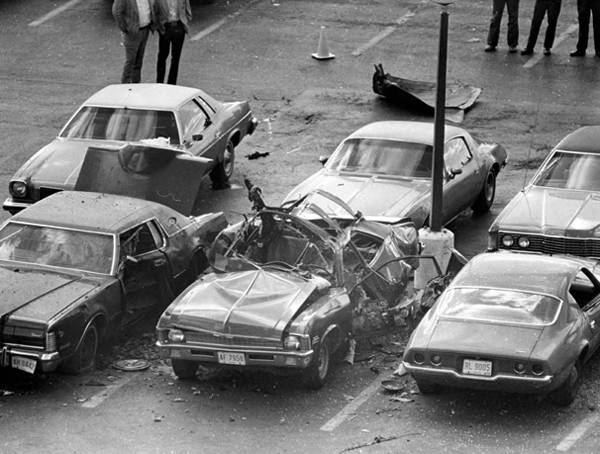
The 43-year-old Greene’s death ended the mob war and secured Licavoli’s control over Cleveland’s criminal operations.
The FBI Mole and Downfall
With Greene eliminated, Licavoli enjoyed a brief period of unchallenged authority. The Cleveland family had even managed to infiltrate the FBI’s Cleveland office by bribing a female clerk named Geraldine Rabinowitz to provide information about organized crime investigations and the identities of government informants.
In a conversation with his lifelong friend Jimmy Fratianno, Licavoli ironically remarked: “Jimmy, sometimes, you know, I think this fucking outfit of ours is like the old Communist party in this country. It’s getting so that there’s more fucking spies in it than members.” What Licavoli didn’t know was that Fratianno himself had become an FBI informant.
When Ray Ferritto was arrested for Greene’s murder after a suspicious motorist reported his getaway car’s license plate to police, he quickly agreed to cooperate with authorities. Fratianno, learning that Licavoli had discovered the FBI mole and fearing his own cover would be blown, entered the Witness Protection Program in November 1977. The FBI arrested Rabinowitz within weeks, closing Licavoli’s source inside the bureau.
RICO Conviction
Licavoli was arrested for Greene’s murder just two months after the October 1977 bombing. At trial in 1978, Cisternino and Carabbia were convicted, but Licavoli was acquitted. When Fratianno testified against Licavoli in a federal racketeering trial for the bribery of Rabinowitz, Licavoli was again acquitted.
However, prosecutors weren’t finished. They targeted Licavoli under the newly enacted Racketeer Influenced and Corrupt Organizations (RICO) Act, legislation specifically designed with extended penalties for organized crime activities. At age 77, Licavoli was brought to trial with five other defendants in federal court.
On July 8, 1982, all defendants were convicted. On July 30, 1982, Licavoli was sentenced to serve 17 years in federal prison. He became one of the earliest organized crime figures convicted under RICO, a legal framework that would eventually dismantle Mafia families across the country.
Death Behind Bars
James Licavoli was imprisoned at the Oxford Federal Correctional Institution in Wisconsin. Warden R.D. Brewer described him as a quiet prisoner who caused no trouble.
On November 23, 1985, Licavoli suffered a heart attack and was taken to Adams County Hospital in Adams, Wisconsin, where he died at 5:30 p.m. He was 81 years old. Services were held in St. Louis, where he had grown up and still had family.
U.S. District Judge William Thomas, who had presided over the conspiracy trial, said simply, “I deeply regret his death.”
Legacy
James Licavoli’s reign as Cleveland boss lasted less than a decade, but it fundamentally altered the trajectory of the Cleveland crime family. The Greene war decimated the organization’s ranks, drew intense law enforcement scrutiny, and provided prosecutors with cooperating witnesses—including Fratianno and Ferritto—whose testimony devastated the family.
Following Licavoli’s conviction, Angelo Lonardo took over as boss but was himself convicted of narcotics charges in 1983 and eventually became a government witness. The Cleveland family, once a powerful player in Midwest organized crime with lucrative interests in Las Vegas casino skimming operations and Teamsters pension fund manipulation, was reduced to a shadow of its former self.
Licavoli’s conviction under RICO presaged the wave of prosecutions that would cripple the American Mafia throughout the 1980s and 1990s. His story—from St. Louis bootlegger to Cleveland boss to federal prisoner—encapsulates the rise and fall of traditional organized crime in America. The man who had survived shootouts, gang wars, and decades of criminal activity ultimately fell victim to the very thing he had sought to exploit: his lifelong friend Jimmy Fratianno’s betrayal and the government’s determination to use every legal tool at its disposal to destroy the mob.