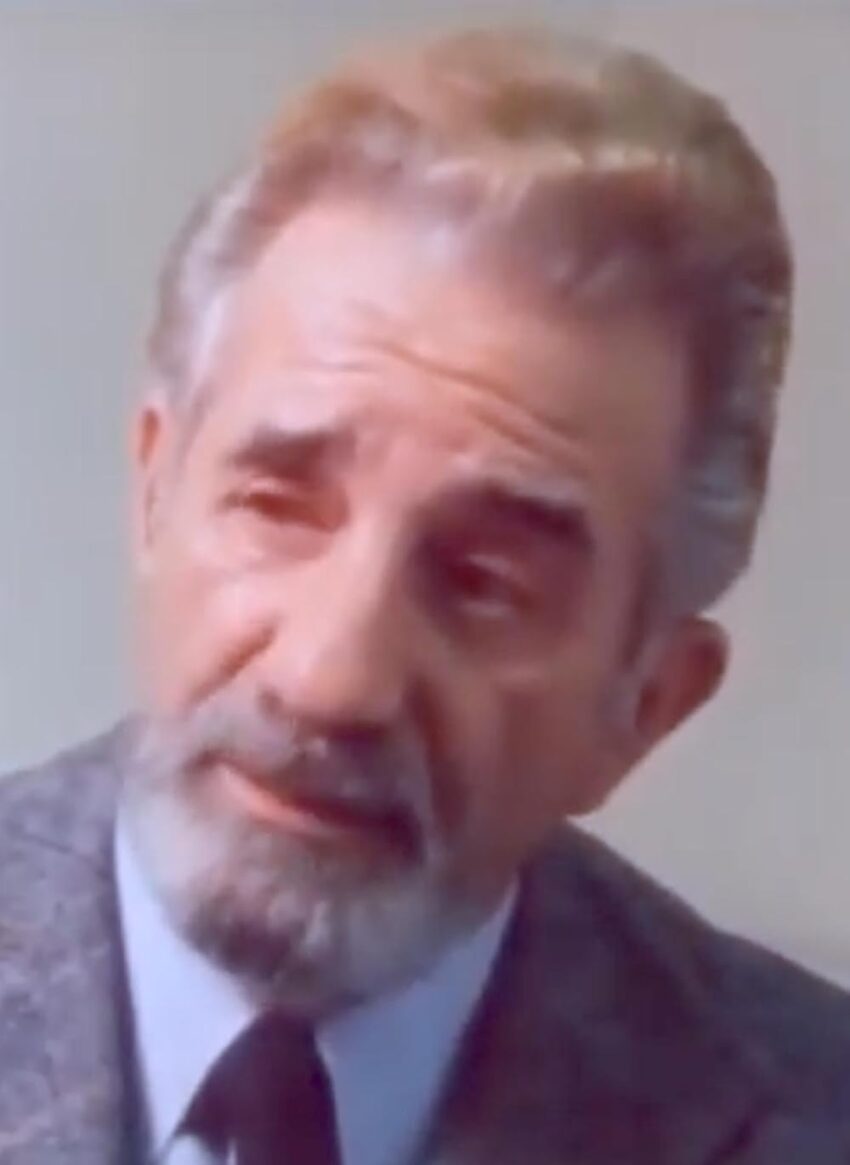
Aladena “Jimmy the Weasel” Fratianno carved out a unique place in American organized crime history. He rose from Cleveland street thief to acting boss of the Los Angeles crime family, only to become the highest-ranking Mafioso to flip and testify for the government—until Sammy “The Bull” Gravano surpassed that distinction a decade later. Fratianno’s story reads like a mob epic: decades of killings, power struggles across multiple families, and an eventual betrayal that sent shockwaves through La Cosa Nostra nationwide.
From Naples to Cleveland’s Streets
Born in Naples, Italy on November 14, 1913, Fratianno arrived in Cleveland as an infant. His parents settled in the city’s Little Italy neighborhood, where young Aladena quickly developed a distaste for his given name. He insisted on being called “Jimmy” because he thought “Aladena” sounded like “a broad’s name.”
School held no appeal for Fratianno. He dropped out early and turned to petty crime, stealing from fruit stands in the neighborhood. During one theft, a witness watched him outrun pursuing police and shouted, “Look at that weasel run!” The nickname stuck, though Fratianno never liked it and nobody dared call him “Weasel” to his face. As a teenager, he even boxed under the name “Kid Weasel,” trying to own the moniker on his own terms.
By the 1930s, Fratianno had graduated from theft to more serious crimes. In 1937, he was arrested for armed robbery and sentenced to eight years in prison—his first extended stretch behind bars. He was paroled in 1945, but Cleveland was no longer big enough for his ambitions.
Moving West and Making His Bones
After his release, Fratianno headed to Los Angeles, where the underworld was in flux. Initially, he associated with Mickey Cohen, the flashy Jewish mobster who was feuding with Los Angeles crime family boss Jack Dragna. But Fratianno quickly recognized that the traditional Mafia structure offered more stability and power than Cohen’s volatile operation.

Dragna needed reliable enforcers in his war with Cohen, and Fratianno proved himself capable. In 1947, after carrying out several “pieces of work”—mob parlance for murders—Fratianno was formally initiated as a made member of the Los Angeles crime family alongside Louis Tom Dragna and Salvatore “Dago Louie” Piscopo.
His most infamous hit came on August 6, 1951, when Dragna ordered him to kill Anthony Brancato and Anthony Trombino, two Kansas City hoods known as “the Two Tonys.” The pair had made the fatal mistake of robbing the Flamingo Hotel’s cash room in Las Vegas, then compounding their error by shaking down a mob bookmaker in Los Angeles. Fratianno lured them with a phony tip about a $40,000 poker game ripe for robbery. Instead, he and Charley “Bats” Battaglia—a nervous first-timer from Buffalo—climbed into the back seat of the Two Tonys’ Oldsmobile on North Ogden Drive near Hollywood Boulevard and shot both men in the head. The car radio was still playing when police arrived.
The murder remained officially unsolved for over 25 years, protected by an airtight alibi. Fratianno and a dozen other mobsters claimed they’d been at Nick Licata’s Five O’Clock Club in Burbank for a fish fry that night.
Climbing the Ladder and Prison Stints
Despite his value as an enforcer, Fratianno couldn’t stay out of trouble with the law. In 1954, he was convicted of attempted extortion and served more than six years, mostly at San Quentin. After his release, he continued working for the mob while attempting to establish legitimate businesses. In the 1960s, he and his wife Jewel started a trucking company that became quite successful, grossing nearly $1.5 million annually.
However, when a California newspaper exposed his mob connections in 1966, Fratianno was arrested on various charges related to the business. Though eventually acquitted, he and Jewel lost the company. Fratianno also made multiple attempts to gain a stake in Las Vegas casinos, including the Tally Ho Hotel (later the Aladdin), but the Nevada Gaming Control Board blocked him every time.
During this period, Fratianno began providing limited information to the FBI—a dangerous double game. In exchange for $16,000 and reduced scrutiny, he fed agents intelligence on organized crime. His early information was of minimal value and never led to convictions, allowing him to maintain his position in the mob.
Acting Boss of Los Angeles
In 1975, when Los Angeles boss Dominic Brooklier was sentenced to prison, the family offered Fratianno a significant opportunity. Louis Tom Dragna became acting boss on the condition that Fratianno serve as co-acting boss alongside him. This required Fratianno to transfer his membership back to Los Angeles from the Chicago Outfit, where he’d been operating.
As acting boss from 1975 to 1976, Fratianno worked to restore the Los Angeles family’s reputation. The L.A. operation had been seen as weak for years, and Fratianno traveled the country making connections and deals, hoping to solidify his position permanently once Brooklier was released.
But the arrangement soured when Fratianno was approached about killing Frank Bompensiero, one of his few trusted friends in the organization. Bompensiero was suspected of being an informant—and he was right to suspect him. Feeling trapped and betrayed by the murder contract, Fratianno stalled for months until other associates carried out the hit in February 1977.
When Brooklier returned from prison in October 1976, tensions escalated. Brooklier began claiming that Fratianno had never really been acting boss and accused him of running a separate crew. Fratianno began to suspect that Brooklier was laying the groundwork to have him killed.
The Breaking Point
The final straw came in 1977. At a wake for Cleveland mobster Tony Delsanter, Fratianno learned from Cleveland boss James Licavoli that the family had a mole in the FBI—a female clerk providing documents and informant code numbers. When Danny Greene, an Irish mob boss and secret FBI informant, was killed by a car bomb in October 1977, hitman Ray Ferritto was arrested. Evidence found at Ferritto’s house linked him not just to the Greene murder but to Fratianno as well.
Facing federal indictments for murder and realizing that Brooklier intended to kill him, Fratianno made his move. On November 29, 1977, he agreed to become a government witness. It was a seismic event in Mafia history—no acting boss had ever flipped before.
Life as a Witness
Fratianno’s testimony was devastating to organized crime. He helped convict high-level mobsters including Frank “Funzi” Tieri, Anthony “Fat Tony” Salerno, Joseph Aiuppa, Carmine Persico, and his former boss Dominic Brooklier. In exchange, he pleaded guilty to murder charges but served only 21 months of a five-year sentence.
In 1980, Fratianno entered the federal Witness Protection Program with his second wife Jean, whom he’d married in 1975. He became the highest-paid participant in the program’s history, eventually receiving over $1 million in federal payments over ten years. The Mafia placed a $100,000 contract on his life.
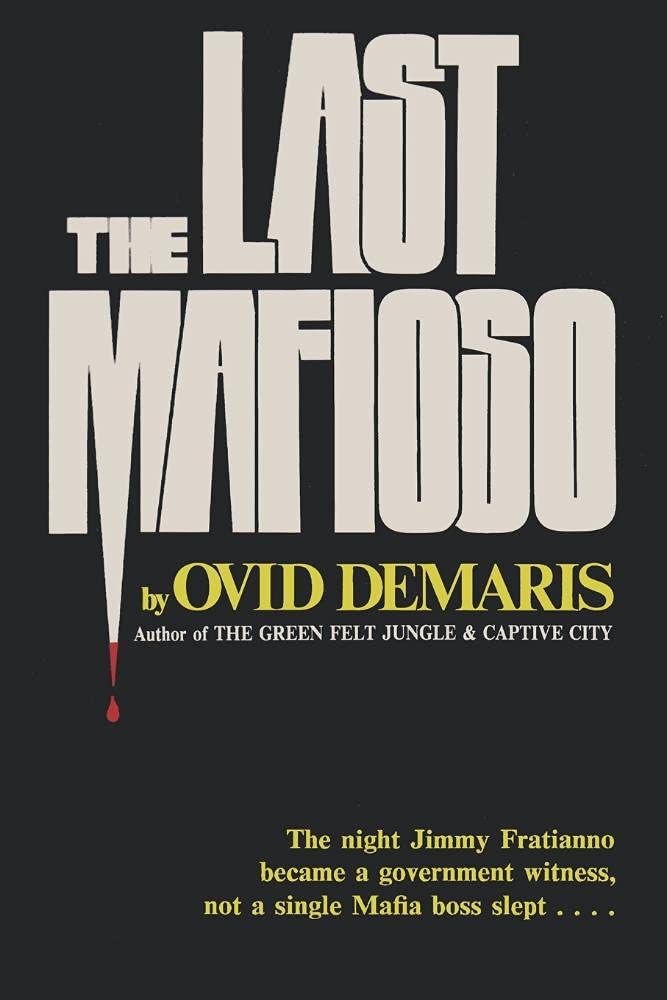
Fratianno co-authored two books: “The Last Mafioso” with Ovid Demaris in 1980, and “Vengeance Is Mine” with Michael J. Zuckerman in 1987. Both became bestsellers, though Fratianno later claimed he never read either one. He also made appearances on television talk shows and news programs, becoming something of a criminal celebrity.
The publicity proved costly. In 1987, after the second book’s publication, the U.S. Marshals Service dropped Fratianno from the Witness Protection Program, declaring it wasn’t “a retirement plan for former mobsters.” The FBI protested vigorously, but the decision stood.
Final Years
Fratianno spent his remaining years living under an assumed name in an undisclosed location, believed to be Oklahoma City. On June 29, 1993, he died peacefully in his sleep at age 79. His wife Jean reported that he’d suffered from Alzheimer’s disease and a series of strokes.
The man who’d killed at least five people (by his own admission) and participated in numerous other murders had managed to die of natural causes—a fate that eluded most of his former associates. Jimmy Fratianno’s transformation from feared mob enforcer to government witness fundamentally changed how law enforcement approached organized crime prosecutions. His willingness to testify provided an unprecedented look inside La Cosa Nostra’s operations and proved that even the highest-ranking mobsters could be turned. As he once said of his Mafia initiation: “They tell you when you come in, you come in alive and you go out dead.” In the end, Fratianno rewrote those rules.