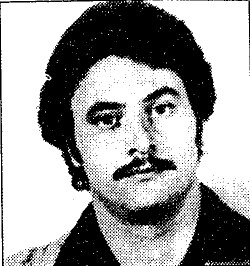
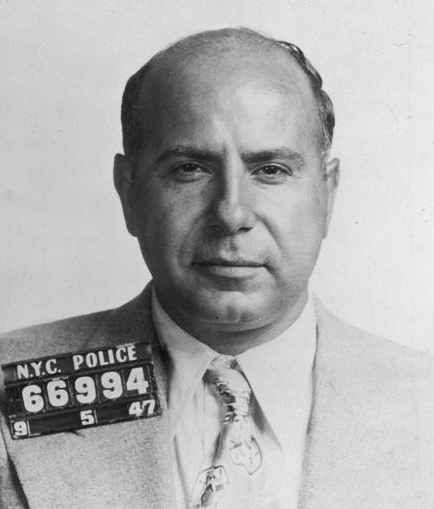
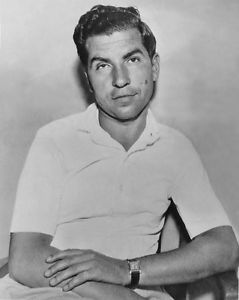
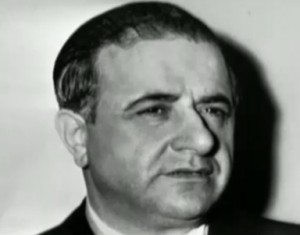
Dominick “Sonny Black” Napolitano – Made Famous in “Donnie Brasco”

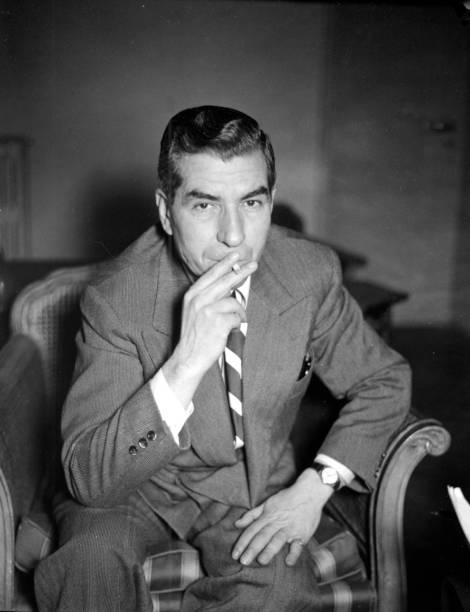
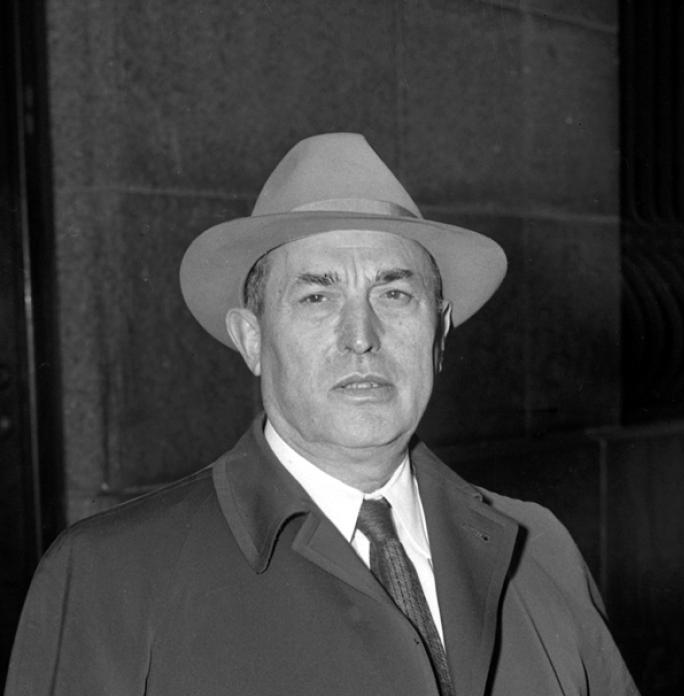
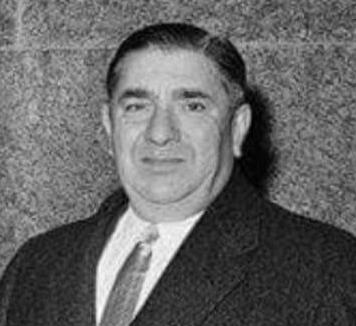
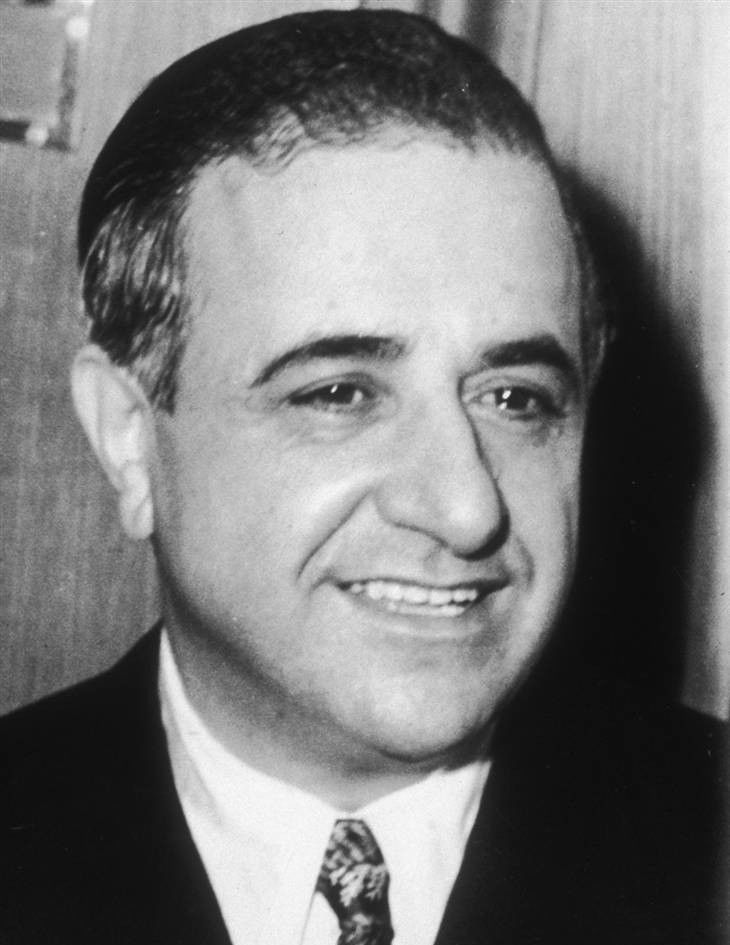
Santo Trafficante Sr. and Sonny Black

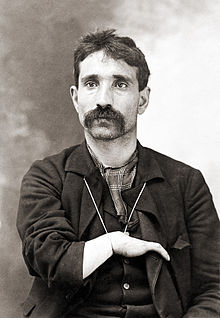
Dominick “Sonny Black” Napolitano came into this world on June 16, 1930 and was raised in Williamsburg, Brooklyn where he got his start as a petty thief. Although his descendants were from Naples, Italy, he was born with blond hair and as he grew into adulthood died it jet black which earned him the nickname “Sonny Black”.

As a gangster, Napolitano controlled parts of Pasco County and Holiday, Florida under the approval of the Trafficante crime family and Santo Trafficante Jr. However, Napolitano was also considering a bookmaking operation in Orlando, at the time a growing gambling district for the mob.

Napolitano owned an apartment building and social club called the motion lounge in New York. An avid pigeon enthusiast, he kept his pigeons on the rooftop of the apartment building. The pigeons had pedigree bloodlines that descended from prize pigeons in France, Germany, and Russia. He one thousands racing his pigeons. Undercover FBI agent Joseph Pistone a.k.a. Donnie Brasco said Napolitano loved visiting his pigeon coop to think.

“Sometimes when we were up on the roof with the pigeons, sunny would lean on the railing and look out over the rooftops of the neighborhood where he had lived all his life. I wondered what he was thinking about.”

            Napolitano often schooled Brasco in the workings of the Mafia and would repeat the same thing over and over.

            “The whole thing is how strong you are and how much power you got and how fucking mean you are-that’s what makes you rise in the mob. Every day is a fucking struggle, because you don’t know who’s looking to knock you off, especially when you become a captain or boss. Every day, someone is looking to dispose of you and take your position. You always got to be on your toes. Every fucking day is a scam day to keep your power and position.”

In 1979 after Carmine “The Cigar” Galante was murdered, Napolitano was promoted to capo replacing his mentor Michael Sabella who was demoted. Napolitano took over Sabella’s crew and became a close and trusted confidante of the imprisoned gangster Philip “Rusty” Rastelli, boss of the Bonanno crime family. However, not all was well with the Bonanno family. After Gallant’s death the family split into two factions, one group aligned with Rastelli, and another group aligned with the Sicilian faction, led by Alphonse “Sonny Red” Indelicato.

It was the job of Joseph Massino and Napolitano to aid Rastelli in ending the struggle and killing the three capo’s opposed to him. Napolitano and Massino new a time would present itself when they could act against the three men, Alphonse Indelicato, Dominick Trinchera, and Philip Giaccone, but until then Napolitano stayed busy with his businesses.

Napolitano owned an Italian-American war veterans club in Williamsburg, Brooklyn, The Motion Lounge, an illegal casino in Pasco County, Florida and a tennis and nightclub called The King’s Court Bottle Club in Holiday, Florida. The Motion Lounge was the headquarters for Napolitano where he and his crew were involved in several illegal activities including burglary, robbery, bank robbery, loansharking, hijacking, bookmaking, casino operations, drug trafficking, and extortion. They were one of the most successful crews in the Bonanno crime family.

When asked about Napolitano agent Pistone said, “Dominick was more observant and disciplined than his old capo Michael Sabella and had a watchful eye. In mob circles, he had an excellent reputation for personal loyalty to his sidewalk soldiers. He would kill you in a minute if you crossed him.” Pistone also remarked how Napolitano was very accurate with small-caliber pistols. In public he was never flamboyant or brazen, always polite. He carried his own suitcases when traveling and was not a 24-hour gangster, meaning you could talk to him about other things besides the Mafia. On occasion Pistone and Napolitano would go out for dinner or have coffee and just “shoot the breeze” like two friends.

Pistone was one of few people that Napolitano could rely upon. As Pistone’s infiltration continued over the years Napolitano remarked how he would nominate him to be “made”, a term used in the Mafia that meant he would become inducted as a full member. In other words they would “open the books”.

On May 5, 1981 the opportunity to kill Indelicato, Trinchera, Giaccone presented itself. The three men were led to Brooklyn’s Embassy Terrace for a sitdown and to discuss a compromise with the Rastelli faction. Waiting for them was the Napolitano crew armed with shotguns and pistols. When Indelicato and the other two men entered one of the gunmen stepped out of the closet and said, “don’t anybody move, this is a stickup” a key phrase to begin open firing. Moments later Indelicato, Trinchera, and Giaccone were dead and the split in the Bonanno family over.

Indelicato was close to his son Bruno. Napolitano new if Anthony wasn’t with them during the murders he would have to be killed to prevent retribution for his father’s murder. Pistone and Benjamin “Lefty” Ruggiero were tasked with murdering Bruno Indelicato.

After six years as an undercover agent in the Bonanno crime family, Joseph Pistone was pulled from the operation. Two day’s after ending the operation known as “Donnie Brasco” FBI agents visited The Motion Lounge to inform Napolitano that his trusted friend and associate of six years was an agent.

Napolitano new that allowing an FBI agent to infiltrate his crew was a death sentence for him. On August 17, 1981 he was

The Cast and Crew of the 1997 Hit Movie Donnie Brasco

“sent for” a term used when Mafia leaders summon you to a meeting. Before leaving for the meeting Napolitano handed his jewelry to his favorite bartender, who had worked for him at The Motion Lounge. He also handed him the keys to his apartment so his pet pigeons would be cared for. When he arrived to the meeting at Bonanno associate Ron Filocomo’s home in Flatlands, Brooklyn, Napolitano was pushed down the staircase to the basement and shot to death by Filocom and Frank Lino with 38 caliber revolvers. When the first shot misfired, Napolitano told them, “hit me one more time and make it good”.

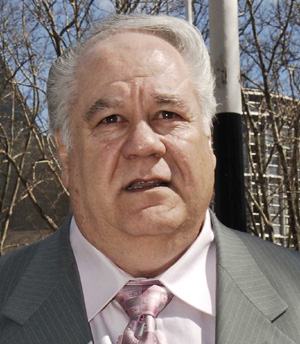
Benedetto “Benny” Aloi – High Profile Defendant in the Infamous 1990′s “Windows Case”

Benedetto “Benny” Aloi was born on October 6, 1935 and had one sibling, a brother named Vincenzo “Vinnie” Aloi.  His father, Sebastian “Buster” Aloi was a soldier in the Profaci crime family and is responsible for bringing his sons into the La Cosa Nostra.

Aloi spent much of his childhood like any other child hanging around his brother and friends and working his way through school. On occasion Aloi would visit his father at the local Profaci hangout where he would run errands and learn about the life of a goodfella.

By his twenties, Aloi was fully integrated in the Colombo crime family formally the Profaci family. By that time his father was a caporegime and handed Aloi and his brother several enterprises to control. One of the most profitable was a garment trucking business that provided substantial income to the Colombo family.

By his thirties, Aloi was one of several hundred mafioso in the sights of the FBI. On November 19, 1974 Aloi and over 150 other members of La Cosa Nostra were indicted on perjury charges.  Aloi was one of a few that were never tried.

By the 1980’s Aloi who had risen to capo was being tracked again by the FBI when it was alleged that he was a involved with a capital finance group that would lend money at extremely high interest rates. The case never made it to court.

Aloi biggest threat came in the infamous “Windows Case” in the early 1990’s. The windows case involved four of the five New York crime families that used their control over the construction unions and local contractors to fix the price of their bids to the New York Housing Authority. During that time the authority was entrenched in a thermal window pane project that would provide new windows to thousands of homes in the projects of New York.

In May 1991, Aloi, now consigliere of the Colombo family was convicted on one count of extortion and one count of conspiracy. As a high profile defendant and convicted criminal, Aloi received five times the amount of time expected and was sentenced to 16 years and eight months in prison. He was released after serving his sixteen year sentenced and subsequent half way house time on May 18, 1991. It had been 18 long years since he had been free and the time behind bars had taken its toll. Aloi was 74 years old when he was released; far too old to get back in the family and learn the ways of the twenty-first century mafia. He officially retired as caporegime and lived out his days in seclusion. He died on April 7, 2011.

Goodfella, Tommy DeSimone


 Thomas Anthony DeSimone was born on May 24, 1950. He was an Italian_American mobster that worked as an associate of the Lucchese crime family of New York. He had several nicknames, but a couple stood out and fit Tommy nicely; “Two-Gun Tommy” because he always had two guns, and “Tommy D”.

Tommy had three siblings, a sister named Dolares and two brothers, Robert (imprisoned for life)  and Anthony DeSimone. Both Robert and Anthony were associates for the Gambino crime family. His brother Anthony was murdered in 1979 and Robert died in . His grandfather was Los Angeles mob boss Rosario DeSimone in 1922, and his uncle Frank DeSimone was the Los Angeles crime family mob boss in 1956.  

Tommy became involved with a Lucchese crime family crew headed by capo Paul Vairo in 1965. He was fifteen years old, skinny and naïve. Jimmy Burke was a family friend of the DeSimone’s and knew Tommy as he grew up. When he was ready, Jimmy took him in handing him a few rackets to get his feet wet so-to-speak.

DeSimone quickly became known for having a quick temper and a huge appetite. He would drink almost an entire gallon of whole milk each day. Friend and fellow Lucchese associate Henry Hill described Tommy as a “pure psychopath”. He committed his first murder at the age of 18 when he shot Howard Goldstein in cold blood as he walked down the street. Henry Hill was with him and said, “That was cold-blooded, Tommy!” DeSimone replied, “Well, I’m a mean cat.”

DeSimone would kill several more times in his short life. In 1970 he killed a made man with the Gambino crime family named “Billy Batts” Devino. As portrayed in the movie Goodfella’s Devino made fun of DeSimone for once being a shoe shine boy. Devino was a feared gunmen and had killed several people, but Tommy had earned respect as well and didn’t take verbal punishment from anyone. A couple of weeks later Devino was drinking at Hill’s bar when he instructed Jimmy Burke and Henry Hill to keep Devino occupied until he returned. DeSimone returned just after closing where DeSimone, Burke, and Hill killed Devino. They buried his body upstate.


Goodfella’s Joe Pesci acting out the scene of Spider’s death.

DeSimone’s third murder was also portrayed in the movie Goodfella’s. According to Henry Hill, this reenactment is very accurate to what actually happened when DeSimone shot and killed Michael “Spider” Gianco. Spider and insulted DeSimone a week before and DeSimone retaliated by shooting him in the foot. When Spider returned to his job as a bartender, he and DeSimone exchanged more words. When Burke jokingly gave Spider money for having the guts to stand up for himself, Tommy pulled out his .38 caliber revolver and shot Spider three times in the chest. Hill checked his pulse and announced he was dead. Burke, who was in charge of the crew told Tommy he would have to dig the hole to hide the body himself. Tommy agreed, and Spider was never seen again. Since the making of the movie there has been speculation that Hill made up Michael “Spider” Gianco as law enforcement looked for the body where Hill stated it would be and found nothing. Furthermore there are no records or birth certificate related to Michael Gianco, and in the neighborhood where he purportedly lived and worked, no one had ever heard of him. Unless a body is found, that death will remained unsolved as Hill, who died on June 25, 2012 was the last person alive who could prove a murder took place.

DeSimone killed several other people after Spider; a warehouse foreman named Stanley Diamond who DeSimone was just supposed to rough up, and Gotti protégé Ronald “Foxy” Jerothe on December 18, 1974. To Jerothe’s disapproval, DeSimone had dated Jerothe’s sister. When Jerothe found out about it, word got back to Tommy that Jerothe had said he was going to kill him. Acting on the threat, DeSimone went to Jerothe’s apartment, knocked on his door, and when Jerothe opened the door, DeSimone stuck a .38 caliber pistol in his face and shot Jerothe between the eyes killing him instantly. DeSimone’s fifth murder occurred when Burke ordered the murder of hisbest friend Dominick “Remo” Cersani. Burke had learned Remo was working with the NYPD and planned to set up Burke in a sting. When Burke found out about the set-up he and DeSimone traveled to Remo’s place, asked him to “go for a ride”, and was subsequently killed by DeSimone by choking him with a piano wire. They buried Remo next to Burke’s bar and a bocce ball court next door. It’s been said, everytime DeSimone and Burke would play someone on that bocce ball court they would say “hey Romo how ya doing?”

DeSimone was alleged to have taken part in the December 1978 Lufthansa heist from JFK International Airport where $6,000,000 dollars was taken from a warehouse. After the heist DeSimone was ordered to kill Parnell “Stacks” Edwards for failing to hide the delivery truck. DeSimone was told he would become a “made” man when he completed the hit. He found out where Stacks was hiding and shot him several times in the head and chest.

On January 14, 1979 DeSimone’s wife, Angela reported him missing. She said she last saw Tommy “a few weeks earlier” when he borrowed money from her. It been said he was killed on January 6, 1979 when Martin Krugman, the person responsible for telling Henry Hill about the Lufthansa money went missing. Several scenarios have come to light describing why Tommy was murdered.

Some say it was because he killed “Billy Batts” Devino and Ronald “Foxy” Jerothe, both members of the

Tommy DeSimone shortly before he went missing.

Gambnio’s without proper permission as mandated by the commission. The penalty for the perpetrator is death. Another scenario is DeSimone was killed by Burke as DeSimone had killed or ordered to be killed almost everyone involved in the Lufthansa heist. A final scenario is given by Henry Hill when he said Tommy was killed by the Gambino family for the two killings. The Gambino’s only found out about the killings after DeSimone had tried to rape Hill’s wife, who was having an affair with Paul Vario while Hill was in prison. Vario told the Gambino’s that DeSimone was responsible and sanctioned his hit. Henry claimed that in “the week after Christmas” that he and Jimmy Burke had gone down to Florida to straighten out a drug deal gone bad. Tommy had remained behind in New York because he was going to be made. When Jimmy called to see if the ceremony had occurred (the code phrase was to ask if Tommy had seen his godmother yet), Burke was told that it had been called off due to a heavy snowfall. The next day, Burke listened in and found out that DeSimone had been murdered; he slammed the receiver down and began crying, as depicted in the film Goodfella’s.

Joseph Anthony “Joe” Colombo Sr., Founder of “The Italian-American Civil Rights League”

      Joe Colombo was born in Brooklyn on June 16, 1923. Much of his early life is unknown; he lived with his parents, and had no other siblings. His father was a member of the American mafia until his murder in 1938. In his younger years Colombo held several legitimate jobs. He spent time in the U.S. Coast Guard, had jobs as a longshoreman, and in worked in a meat packing company. His last legitimate job was selling real estate.

      By the late 1950’s Colombo was fully involved as an enforcer for the Profaci crime family in New York. The Profaci’s were a tough family known as one of the “five families” of New York, and also held a seat on the mafia’s national commission.  As an enforcer Colombo‘s job was to collect money owed to the family and to take part in physical work ordered by his capo or higher ups. Colombo proved early on to be efficient in collecting money and extorting for the family and was quickly “straightened out” or officially inducted in the Cosa Nostra.

     During his career in the mafia, Colombo had several ‘scares’ or close calls. In one situation Colombo and other members of the Profaci leadership were kidnapped by a feared and disgruntled capo in the Profaci family, Joe Gallo. At the time, Joe Profaci, the boss of the family had been requesting larger tributes from Gallo, and the feud grew. Gallo wasn’t the only capo to have increased ‘taxes’ by the boss, but he made the biggest beef because of it. After holding the men for several weeks, an agreement was finally made where Profaci would lessen the tributes owed by Gallo, and Colombo and the other hostages were released. By the end of the year however, Profaci would renege on their deal and the first Colombo war started.

     On June 6, 1962 Joe Profaci died of liver cancer, and long time consigliere Joseph Magliocco took over as boss of the Profaci family. As boss, Magliocco pursued Gallo and his allies attempting several hits but none were successful. One such plot by Magliocco involved murdering the entire commission including Bonnano crime family boss, Joe Bonanno, Lucchese crime family boss, Tommy Lucchese, and Gambino crime family boss, Carlo Gambino. Magliocco handed the contract to Joe Colombo, who promptly revealed the plot to Lucchese and Gambino. With the admission, Magliocco was forced to retire, and Colombo was rewarded for his loyalty to Cosa Nostra and handed the Profaci family renaming it the Colombo crime family.

      At 41 years old, Colombo was the youngest crime family boss in the nation. He was also an avid supporter of Italian-American rights spending countless hours lobbying for equality. In early 1970 Colombo created the Italian-American Civil Rights League. He immediately went after the federal government citing several instances where they purposely prevented Italian-Americans from equal liberties in the work force. His work generated a massive response from the Italian-American community and with their support; Colombo’s league became the rally cry for action. On June 29, 1970 50,000 people showed up in Columbus Circle in New York City for an “Italian-American Unity Day” rally. Several U.S. Congressmen attended the event. Soon after, the League grew national attention, which was good for Italian-American’s but bad for the American mafia and the commission noticed. In November 1971 the League drew further publicity when Frank Sinatra headlined at a sold out show in Madison Square Garden. Later that year and into 1971 Colombo himself appeared in television interviews and speaking appearances for the League. In spring 1971 Paramount Pictures was forced to halt filming of “The Godfather” due to overwhelming sediment from the Italian-American community. Movie producer Albert Ruddy met with Colombo and agreed to excise the terms “Mafia” and “Cosa Nostra” from the film in exchange for the League’s backing. Colombo agreed and filming resumed.

     Colombo planned on building on his success with the League from the first Columbus Day rally and announced a second annual rally to be held on June 28, 1971 much to the displeasure from the commission. Prior to the rally the Colombo family nemesis, Joe Gallo was released from prison. During his time in prison, Gallo had spent his time building relationships with the other families and Harlem and Bedfod-Stuyvesant gangs of African-American descent. Upon his release, Colombo set up a meeting with Gallo to bury the hatchet so-to-speak, but Gallo refused. It’s said Colombo was going to offer Gallo $1000 to keep the calm. Gallo responded with $100,000 and the meeting never happened. A murder contract was immediately issued on Joe Gallo.

     On March 11, 1971 Colombo was convicted and sentenced to two and half years for perjury after lying on a real estate application many years before. His sentenced was delayed pending appeal.

     On June 8, 1971 Colombo arrived at his second annual “Italian-American Unity Day” rally. Thousands were in attendance along with Congressmen and entertainers. As Colombo was introduced and made his way to the stage, he was shot several times by an African-American man named Jerome Johnson who was wearing journalist credentials. He held a camera in one hand, and a pistol in the other. Several men including Colombo’s son jumped on Johnson however before they could wrestle him to the ground Johnson was shot three times in the back by an unknown African-American assailant who then fled on foot along with a women who initially arrived with Johnson. Neither was found.


Colombo being loaded into an ambulance after being shot.

Although he was shot several times at point blank range, Colombo survived the assassination attempt but never regained consciousness. He remained in a vegetative state until his death nearly seven years later when he died at his estate on May 22, 1978.

     Colombo’s murder was never solved, however because it was an African-American who committed the crime, and another who killed the gunmen, it’s believed Joe Gallo was to blame. Year’s later news emerged that Carlo Gambino was angered at Colombo’s actions and orchestrated the plot to kill Colombo. The NYPD largely influenced by the powerful Carlo Gambino eventually concluded that Jerome Johnson acted alone.

Salvatore “Toto” D’Aquila – First Boss of the Gambino Crime Family

      Salvatore D’Aquila was born in November 1877 Palermo, Sicily and immigrated to America in 1906 at the age of 29. Before leaving Sicily, D’Aquila was already heavily involved with organized crime. He’s known as a “Mustache Pete”, which unlike the younger Sicilian-Americans known as the “Young Turks”, the Mustache Pete’s’ had usually committed their first killings in Italy. When he arrived in New York, he took up roots with other Sicilians working in a cheese importing business. It didn’t take long for him to lean on his old world connections and juggle the importing business with an underworld career.

     D’Aquila aligned himself with another Mustache Pete that had already solidified himself as a boss in New York. Giuseppe “the Clutch Hand” Morello ran a powerful organization in the Bronx and was considered the boss of bosses. In all actuality he did lead the most powerful criminal organization in New York, but it would be short lived. Nonetheless, D’Aquila worked alongside Morello as his confidence man, in today’s terms the position is similar to a caporegime where they lead in instigating criminal activities. The word itself is shortened today to “con-man”.

     Although little is known about his level of loyalty to Morello at the time, D’Aquila moved to Brooklyn where he became a powerful lieutenant for the family. He was arrested in 1906 and 1909 but both charges were dropped, a possible testament to his powerful position with the Morello’s.

Giuseppe “Joe the Boss” Masseria

      In 1910 Morello and his second in command Ignazio Lupo were imprisoned on counterfeiting charges. Both were sentenced to 30 years. It’s widely speculated that D’Aquila took over the Morello family after their incarceration but it’s untrue. Before he was imprisoned, Morello was getting squeezed by an up-and-coming Mafioso and former capo of the Morello’s Giuseppe “Joe the Boss” Masseria. D’Aquila didn’t have the backing to battle against Masseria, so he moved away from the Morello family and started his own gang in East Harlem and the Bronx taking with him several loyal followers. Morello’s half-brother Nicola took over the Morello’s until his murder in 1916.

      As leader of his new family, D’Aquila moved to unite all the mafia gangs in New York. He set out killing several low ranking gang bosses in East Harlem but was rebuffed when he tried to take over the Lower East Side. Although his attempt to become boss of bosses failed quickly, D’Aquila didn’t have all his eggs in one basket and had seized control of several ports at the same time. With all the potential wealth to be had in the early years of prohibition, D’Aquila’s family grew as Mafioso flocked to join the family with riches on their mind.

      By 1920 D’Aquila had become close to Cleveland boss Joseph Lonardo, and other Brooklyn gang leaders Frankie Yale who was the original employer of Al Capone, and Cola Schiro, whose gang eventually became the Bonanno crime family. D’Aquila also had several top Mafioso working for him in Brooklyn; Alfred Mineo, Giuseppe Traina, and Frank Scalise, who one day would help mobster Bugsy Siegel open the Flamingo Hotel & Casino in Las Vegas in 1945.

     Later that year Giuseppe Morello was released from prison and rejoined the struggling Morello family.

Al Capone also known as “Scarface” or “Big Al”

     D’Aquila wanted to stifle Morello’s comeback and set out to have him and several of his top associates’ murdered along with a D’Aquila associate Umberto Valenti. D’Aquila thought Valenti was becoming too powerful and he questioned Valenti’s loyalty. Upon hearing of the order, Valenti talked D’Aquila into giving him another chance to prove his loyalty to the boss. Valenti received the contract to kill the Morello leadership. On May 8, 1922 Valenti and his gunmen murdered Morello cousin Vincent Terranova. On the same day they attempted to kill Masseria but missed. May 10, 1922 Valenti and gunmen Silva Tagliagamba ambushed Masseria again. Tagliagamba was shot in the gunfight, but Masseria escaped. Tagliagamba would die of his wounds in June. On August 9, 1922 Valenti once again attempted to kill Masseria on Second Avenue and, after killing both of Masseria’s bodyguards, followed him into a local millinery store where Masseria managed to escape. It was during his quest to kill Masseria that Valenti began to see a shift in power. Realizing he may never get Masseria and would himself become a target, Valenti set up a meeting to settle the dispute between both gangs. On August 11, 1922 Valenti was the only man to show for the meeting, and fearing a trap turned to run from the area when two men including Salvatore Luciana, who one day would be known as Lucky Luciano, appeared. Valenti dodged bullets as he ran, and jumped on to the side of a moving taxi where he was gunned down.

     With Valenti dead, the violence ended, and so did much of D’Aquila’s influence. Several of his closest associates began to defect including a close friend Saverio “Sam” Pollaccia, who became a personal adviser to Masseria. In 1925 D’Aquila was forced to retreat from New York back to the Bronx. He purchased a home directly across from the main entrance to the Bronx zoo. On October 13, 1927, D’Aquila lost another allie as Joseph Lonardo was murdered during a power struggle. In July 1928 yet another allie, Frankie Yale, was slain on the streets, and although D’Aquila was still considered very powerful, Masseria and Morello were determined to end his reign.

      On October 10, 1928 D’Aquila left his home for a doctor’s appointment. As he walked down the street several men approached him. One of the men pulled out a pistol and shot D’Aquila two times in the chest. D’Aquila fell to the ground where the man fired another seven bullets into his body. The hit is widely thought to have been organized by D’Aquila underboss Al Mineo who was likely given an ultimatum; set up D’Aquila or be killed with him. Soon after D’Aquila’s murder Mineo was given control of the D’Aquila family where through a series of successions would one day become known as the Gambino crime family.


Hit Counter provided by Skylight